


The Legacy of George Blumenthal

There are few places in the Metropolitan Museum of Art that leave visitors as awestruck as the Vélez Blanco Patio. Bathed in natural light, its delicate marble arches, intricate carvings, and graceful Renaissance proportions seem almost impossible to believe were once part of a sixteenth-century Spanish castle. Every day, thousands of visitors pause beneath its colonnades, admiring one of the museum's greatest architectural treasures. Most never realize that before it became one of the Metropolitan's most celebrated galleries, this remarkable courtyard stood at the heart of a private New York residence. Fewer still know the name of the man whose vision preserved it for future generations.
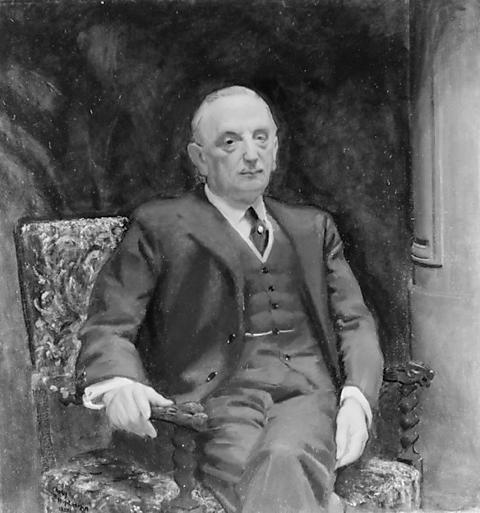
George Blumenthal left no towering monument to mark his own resting place. There is no grand mausoleum bearing his name, no sculpted memorial proclaiming his achievements, and no elaborate family vault visited by admirers. Instead, his cremated remains were ultimately placed in an unmarked communal cremains grave at Ferncliff Cemetery after they went unclaimed following his death. Yet few individuals have left a greater or more enduring mark upon New York's cultural landscape. The collections he assembled, the institutions he strengthened, and the extraordinary gifts he made continue to touch the lives of millions each year. His story is not simply one of wealth or privilege, but of stewardship. It is the story of a man who believed that great art, great architecture, and great learning should ultimately belong to the public.
To understand George Blumenthal, however, one must begin not in New York, but in Frankfurt am Main.
When George Blumenthal was born on April 7, 1858, Frankfurt was one of Europe's great financial capitals. For centuries, merchants and bankers from across the continent had gathered within its ancient streets to conduct business, exchange currencies, and negotiate international trade. Wealth flowed through the city alongside ideas, scholarship, and culture, creating an atmosphere unlike almost anywhere else in Germany. It was a city where commerce and intellect existed side by side, and one that produced generations of financiers whose influence extended far beyond its medieval walls.
George was born into this world as the son of Louis Blumenthal and Rose Goldschmidt Blumenthal. His family belonged to Frankfurt's established Jewish community, a community that valued education, enterprise, philanthropy, and civic responsibility. These principles would shape George throughout his life, although neither he nor his parents could have imagined how dramatically their future would soon change.
The decade into which George was born proved to be one of profound political upheaval. In 1866, following the Austro-Prussian War, the independent Free City of Frankfurt was annexed by the Kingdom of Prussia. The political and economic uncertainty that followed prompted many German-Jewish families to look toward America, where opportunity appeared limitless. Among them were the Blumenthals.
Around May 1867, when George was only nine years old, the family departed from the port of Bremen and crossed the Atlantic to begin a new life in the United States. Like countless immigrant families, they left behind familiar streets, generations of family history, and a homeland undergoing dramatic change. Unlike many immigrants who arrived with little beyond hope, the Blumenthals also carried with them a tradition of business, education, and cultural refinement that would help shape their future in America. George would later recall only that he had sailed from Bremen about May 1867, a simple statement in a passport application that concealed one of the most important journeys of his life.
New York was itself transforming when the Blumenthals arrived. The Civil War had ended only two years earlier, and the city was entering an era of astonishing growth. Banks multiplied, railroads stretched across the continent, fortunes were being made almost overnight, and Fifth Avenue was rapidly becoming the address of America's emerging elite. At the same time, New York's German-Jewish community was establishing itself as one of the city's great civic and philanthropic forces. Families whose names would become synonymous with banking, commerce, philanthropy, and the arts were building businesses while also founding hospitals, educational institutions, charities, and congregations that would shape New York for generations.
The Blumenthals became part of that remarkable community. They were affiliated with Temple Emanu-El, then the leading Reform Jewish congregation in New York, whose members included many of the city's most influential German-Jewish families. More than simply a place of worship, Temple Emanu-El represented a community deeply committed to education, charitable work, public service, and cultural advancement. These values would remain evident throughout George Blumenthal's life, influencing not only the causes he supported but also his conviction that wealth carried with it a responsibility to benefit society.
As George matured, he entered a world where international finance was becoming increasingly interconnected. His abilities soon led him to Lazard Frères, the prestigious investment banking house founded by French brothers who had expanded their business from New Orleans and San Francisco to New York, London, and Paris. The firm stood at the center of international banking, advising governments, financing railroads and industry, and maintaining close financial ties between Europe and the United States. For a young man born in Frankfurt and educated in America, it proved an ideal environment. George possessed not only financial ability, but also an ease within both European and American society that would distinguish him throughout his career.
Although banking would make him one of the most respected financiers of his generation, his greatest legacy would not be measured in dollars or securities. It would be found in museums, hospitals, scholarship, philanthropy, and the preservation of art itself. That transformation, however, would not occur through business alone. It would begin with a remarkable partnership that forever changed the course of his life.

When George Blumenthal married Florence Meyer on January 5, 1898, he found far more than a wife. He found an intellectual equal whose love of art, history, and culture perfectly complemented his own growing interests. Florence, the daughter of Eugene Isaac Meyer and Estelle Levison Meyer, had been raised in a family that valued education and refinement. She possessed an instinctive appreciation for beauty, a sharp eye for quality, and a curiosity that would shape every aspect of the life they built together.

The marriage united two families already prominent within New York's German-Jewish community, but the partnership that followed was unlike many of the era's fashionable society marriages. George and Florence shared genuine intellectual interests. Together they visited museums, traveled throughout Europe, studied works of art, met collectors and scholars, and gradually developed a philosophy that collecting should be about preservation rather than possession. They were not interested in assembling a fashionable assortment of expensive objects. Instead, they sought works that represented the highest achievements of human creativity and craftsmanship, believing such treasures should ultimately educate and inspire others.
While George's responsibilities at Lazard Frères continued to expand, Florence increasingly became his partner in building what would become one of the finest private collections in America. Their travels took them repeatedly across the Atlantic, where George balanced international banking with visits to galleries, dealers, historic estates, and auction houses. Europe remained deeply familiar to him, and each journey strengthened both his professional relationships and his growing passion for collecting. Passport applications filed throughout the 1910s and 1920s reveal a man who crossed the Atlantic regularly,
spending extended periods abroad while maintaining close ties to New York's financial and cultural life.
The Blumenthals understood that great collections were not created overnight. They required patience, scholarship, trusted advisers, and an unwavering commitment to quality. Paintings, sculpture, tapestries, illuminated manuscripts, Renaissance furnishings, decorative arts, and architectural fragments all became subjects of careful study before a purchase was ever considered. They sought authenticity above fashion and historical significance above novelty. Every acquisition reflected deliberate thought rather than impulse.
Their lives, however, were not untouched by sorrow.

On December 30, 1900, George and Florence welcomed the birth of their only child, George Blumenthal Jr. Their happiness proved heartbreakingly brief. In 1906, their young son died at only six years of age. No parent fully recovers from the loss of a child, and although George and Florence rarely spoke publicly of their grief, friends would later observe an even deeper devotion to philanthropy, scholarship, and the preservation of beauty. Whether consciously or not, the loss seemed to strengthen their determination to create something lasting that would outlive them both.
As their vision expanded, so too did their ambitions.
By the opening years of the twentieth century, George had become one of the country's most respected investment bankers. Yet financial success alone no longer defined him. He accepted positions of increasing responsibility at Mount Sinai Hospital, believing deeply in medical education and charitable care, while also becoming increasingly involved with the Metropolitan Museum of Art. These institutions would eventually occupy as much of his attention as banking itself, reflecting a growing belief that wealth carried obligations extending far beyond personal success.
The Blumenthals soon recognized that the collection they were assembling had outgrown any conventional residence. Their paintings, sculpture, tapestries, furniture, and architectural treasures deserved a setting equal to their historical importance. Rather than merely constructing another Fifth Avenue mansion, George and Florence envisioned something altogether different: a home designed around art itself.

In 1911, work began on what would become one of New York's most remarkable private residences at 50 East 70th Street. George selected the distinguished architectural firm of Trowbridge & Livingston to create a house that combined the dignity of a Renaissance palace with the comforts of a modern American home. Every room was carefully planned, not simply for daily living, but to display works of art in surroundings worthy of their history. The mansion would ultimately occupy nearly an entire city block opposite Central Park, yet despite its grandeur, it was conceived less as a monument to wealth than as a carefully orchestrated setting for one of America's greatest private collections.
Its most extraordinary feature, however, had not yet arrived from Spain.
When construction began on the Blumenthal residence, George and Florence envisioned far more than an elegant New York mansion. They wanted a home where every room reflected centuries of artistic achievement, where architecture and art existed in harmony, and where visitors could experience the beauty of the past as naturally as they moved from one room to the next. Their greatest ambition, however, would require transporting a masterpiece of Renaissance architecture across an ocean.

High in the province of Almería in southeastern Spain stood the Castle of Vélez Blanco. Built between 1506 and 1515 for Pedro Fajardo y Chacón, the first Marquis of Los Vélez, the fortress overlooked the surrounding countryside for centuries. At its center lay a magnificent two-story marble courtyard unlike anything else in Spain. Italian craftsmen carved graceful columns, elaborate capitals, heraldic shields, and intricate decorative panels from brilliant white Macael marble, creating one of the finest examples of the Spanish Renaissance.
By the opening years of the twentieth century, however, the castle had fallen into decline. Political instability, neglect, and changing ownership left many of its architectural treasures vulnerable. In 1904, the magnificent courtyard was carefully dismantled and removed from the castle, packed into hundreds of crates, and shipped out of Spain. Its departure caused considerable controversy, but like so many architectural masterpieces of the period, it entered the international art market, where wealthy collectors and museums competed for objects of extraordinary importance. George and Florence immediately recognized its significance.
Rather than viewing the courtyard as an exotic curiosity, they understood it as one of the great surviving masterpieces of Renaissance architecture. They purchased the patio with the intention of preserving it intact, not as an isolated exhibit, but as the centerpiece of the home they were creating in New York. Designing a residence around an architectural treasure nearly four hundred years old was an extraordinary undertaking, requiring architects, engineers, craftsmen, and stonemasons to adapt a modern American house to accommodate a monumental work never intended to leave Spain.
When the mansion at 50 East 70th Street was completed, visitors entered one of the most remarkable private residences in the United States. Beyond its formal reception rooms, galleries, and library lay the breathtaking marble courtyard, flooded with light from above and surrounded by sculptures, tapestries, paintings, and Renaissance furnishings. The effect was unlike anything else in New York. Rather than displaying art against fashionable interiors, the Blumenthals had created an environment where architecture itself became one of the collection's greatest works of art.
The house quickly became known within artistic and scholarly circles as one of America's finest private collections. Museum directors, historians, diplomats, collectors, musicians, and distinguished visitors from Europe and the United States crossed its threshold. Every room reflected years of thoughtful collecting rather than conspicuous display. Renaissance sculpture stood beside medieval tapestries. Rare manuscripts complemented paintings by the Old Masters. Decorative arts, furniture, ceramics, and architectural fragments all found their place within a carefully balanced whole. Nothing appeared accidental. Every object had been chosen because it represented excellence. Yet George Blumenthal never believed these treasures truly belonged to him.
As his responsibilities at the Metropolitan Museum of Art expanded, his philosophy became increasingly clear. Private collectors served only as temporary custodians of history. Their responsibility was not merely to own important works of art, but to preserve them until they could be entrusted to institutions capable of protecting them for generations to come. It was a belief that distinguished George from many of his contemporaries. While others built collections that reflected personal prestige, George increasingly collected with the museum in mind.
His influence at the Metropolitan steadily grew. Having joined the Board of Trustees in 1908, he became one of the institution's most active supporters, offering not only generous financial assistance but also thoughtful leadership during a period of tremendous growth. He worked closely with museum directors, curators, architects, and fellow trustees, encouraging acquisitions that would strengthen the museum's collections while supporting scholarly research and public education. His experience in international finance brought discipline to the institution's administration, while his deep appreciation for art helped shape its collecting philosophy.
His reputation extended well beyond the United States. France recognized his contributions to the preservation of French art and culture by appointing him to the Legion of Honor, eventually advancing him through its distinguished ranks. Museums, universities, hospitals, and charitable organizations likewise sought his guidance, recognizing a man whose judgment carried equal weight in boardrooms, galleries, and philanthropic institutions.
Then, in 1930, George suffered the greatest personal loss of his adult life.

Florence, his partner for more than three decades, died after helping shape every aspect of the remarkable legacy they had created together. Her influence could be seen throughout the house on East 70th Street, within every carefully chosen object, and in the philosophy of collecting they had developed side by side. Although George would eventually remarry, the extraordinary partnership that had transformed two passionate collectors into internationally respected patrons of the arts had come to an end.
Four years later, following the death of J. Pierpont Morgan, George Blumenthal was elected President of the Metropolitan Museum of Art. It was the culmination of decades devoted to the institution he loved. As Europe once again moved toward war and uncertainty, the responsibility for safeguarding one of the world's great museums rested in the hands of the boy who had left Frankfurt more than sixty years earlier. The greatest challenge of his life still lay ahead.
Florence Blumenthal's death in 1930 marked the end of one of America's great collecting partnerships, but it did not end the work she and George had begun together. If anything, George became even more devoted to the institutions and ideals they had shared. The collection they had assembled was no longer simply a reflection of their lives. It had become a responsibility.
By then, George Blumenthal had long since stepped away from being known merely as a banker. Although his career at Lazard Frères had brought him considerable success and international respect, his public identity increasingly rested upon philanthropy, education, and the arts. His leadership was sought by hospitals, universities, charitable organizations, and cultural institutions throughout New York. Quiet by nature and rarely seeking public attention, he became known as a man whose judgment was measured, thoughtful, and entirely free of personal ambition. His greatest commitment remained the Metropolitan Museum of Art.
Having served the museum for decades as a trustee and benefactor, George was elected President of the Metropolitan Museum of Art in 1934, succeeding J. Pierpont Morgan. It was both an honor and an enormous responsibility. The museum had grown into one of the world's great cultural institutions, attracting scholars, artists, and visitors from across the globe. Guiding such an institution required more than administrative skill. It demanded vision, diplomacy, and a lifelong understanding of the importance of preserving the world's artistic heritage. George possessed all three.
Under his leadership, the Metropolitan continued to expand its collections while strengthening its educational mission. He believed the museum existed not for collectors or social prestige, but for the public. Great works of art, once hidden in palaces and private estates, should be studied, admired, and understood by everyone. It was the same philosophy that had guided his own collecting for decades.
As political tensions mounted throughout Europe during the late 1930s, museums increasingly recognized the fragile nature of civilization itself. Wars could destroy centuries of artistic achievement within days. Governments could fall. Dynasties could disappear. Yet museums remained among the few institutions capable of preserving humanity's cultural memory. George understood this perhaps better than most. Having been born in Europe, educated in America, and active in both worlds throughout his life, he appreciated how quickly history could change.

Despite advancing age, he remained actively engaged in museum affairs, charitable work, and the careful management of the legacy he and Florence had spent decades creating. He also found companionship once again when he married Mary Ann Payne, the widow of financier James Blanchard Clews. While their marriage brought comfort during his later years, the artistic vision that defined his life's work had already been established during his years with Florence. George's thoughts increasingly turned toward the future.
Unlike many collectors, he never imagined his treasures remaining permanently within his family. He believed they belonged to future generations. Long before his death, he carefully arranged for many of the works he had spent a lifetime acquiring to become part of the Metropolitan Museum's permanent collections. Even more remarkably, he determined that the house itself should not become an empty monument.
Some of the Bequests of George Blumenthal in 1941 to The Met
To many, the mansion at 50 East 70th Street represented the pinnacle of New York society. It was admired for its architecture, celebrated for its collections, and regarded as one of the city's finest private residences. Yet George saw it differently. Without the people who had given it purpose, it was simply a building occupying valuable land. Rather than preserving it as a shrine to himself, he directed that it eventually be dismantled. Architectural elements of lasting importance would be saved. The collections would pass to the museum. The remainder would be sold, with the proceeds continuing the charitable work that had defined his life, It was an extraordinary decision.
Even in planning for his own death, George Blumenthal thought not of memorializing himself but of strengthening the institutions he believed would best serve the public.
On June 26, 1941, George Blumenthal died at the age of eighty-three. Newspapers across the country reported the passing of one of America's leading philanthropists, collectors, and museum presidents. They spoke of the banker, the patron of the arts, the benefactor, and the civic leader. Few, however, could fully appreciate the remarkable foresight contained within the plans he had quietly put into place. His death marked the end of a distinguished life. His legacy was only beginning.
The magnificent mansion on East 70th Street would eventually disappear. Its collections would enrich one of the world's greatest museums. The extraordinary marble patio that had once stood at the heart of a Spanish castle would welcome millions of visitors inside the Metropolitan Museum of Art. And George Blumenthal himself, the man responsible for preserving so much of the past, would leave behind almost no monument to his own memory.
Today, countless visitors pause beneath the graceful arches of the Vélez Blanco Patio, marveling at its beauty without ever realizing that its journey to the Metropolitan began with the vision of one man and the partnership he shared with the woman who inspired it. George Blumenthal understood something that many collectors never did. Wealth fades. Buildings disappear. Names are forgotten.
But when history is preserved and shared, its influence can endure forever.
Vélez Blanco: Gallery of Photos Courtesy of The Met


Comments