


Mary Lily Kenan


Mary Lily Kenan was born on June 14, 1867 at Liberty Hall in Kenansville, North Carolina, the daughter of William Rand Kenan and Mary Hargrave Kenan. She came from one of the oldest and most prominent families in the region. Her childhood was shaped by the social standing and civic involvement of the Kenans, a family long established in North Carolina public life. She spent her early years in Wilmington, where she grew up alongside her siblings William, Jessie, and Sarah. She received an excellent education for a young woman of her time. She first attended Tileston School and later studied piano and voice at Peace College in Raleigh. From a young age she was described as graceful, accomplished, and admired, qualities that would later draw considerable attention as she moved into broader social circles.
In the early 1890s Mary Lily began traveling through the resort communities frequented by wealthy industrialists and members of the Gilded Age elite. During a visit to Newport, Rhode Island, in 1891 she met Henry Morrison Flagler, one of the leading figures of American industry and a co founder of Standard Oil. She was twenty three and he was sixty one. Although their ages differed greatly, their connection deepened over time.

After Flagler’s marriage ended, he and Mary Lily were wed on August 24, 1901 at her family home in Kenansville. Their union placed her among the most visible women in American society and transformed the course of her life.

As a gift to Mary Lily, Henry Flagler commissioned Whitehall, an immense Beaux Arts mansion in Palm Beach, Florida.

The house, completed in 1902, was intended as a winter residence for the couple and stood as a monumental tribute to her. Flagler frequently referred to Whitehall as a gift to his bride, and those who visited the estate recognized it as a symbol of his affection.
The couple spent their winters there, arriving by private railcar to host a social season that drew prominent guests from across the country. Their marriage was widely regarded as affectionate and harmonious. Despite the difference in their ages, they were known to enjoy travel, art, music, and the company of close friends.
Contemporary observers noted that she brought warmth and vitality to Flagler’s life at a time when his health was beginning to decline, and her presence was credited with easing the burdens of his final years.
During their marriage Mary Lily played an important role as hostess and partner in Henry Flagler’s philanthropic and civic interests.

She accompanied him throughout his ongoing work in Florida, where he continued to build railroads, hotels, and civic infrastructure that helped transform the state into a major destination. She also took an interest in the charitable projects that he supported, and together they developed a reputation for generosity within their social and regional communities. The winters they spent at Whitehall were marked by lavish entertainments, orchestral evenings, and carefully planned gatherings that made the house one of the most admired residences in the country.

In 1913 Henry Flagler suffered a fall at Whitehall that resulted in injuries from which he could not recover. He died at the age of eighty three with Mary Lily by his side. In the aftermath of his death she inherited the bulk of his enormous fortune, instantly becoming one of the wealthiest women in the United States. Her life changed dramatically. She maintained residences in New York and Florida, oversaw her late husband’s charitable commitments, and managed a fortune that had few equals in American society. She continued to be known for a quiet dignity that contrasted with the dramatic circumstances that sometimes surrounded her.

In November 1916 she married Robert Worth Bingham of Louisville, Kentucky, a lawyer, judge, and future newspaper publisher. Before the marriage Bingham signed a document renouncing any claim to her fortune, a measure that reflected both her own financial independence and the expectations placed on marriages involving great wealth.

Although the couple appeared compatible in public, her health began to decline within months of the wedding. She experienced chest pains and increasing weakness, and physicians treated her with repeated doses of morphine in an attempt to manage her discomfort.
On July 27, 1917 during an intense heat wave in Louisville, she was found unconscious in a bath at the Bingham residence. She died soon afterward at the age of fifty. Mary Kenan Flagler Bingham was entombed in the Kenan family plot at Oakdale Cemetery, in Wilmington, North Carolina.

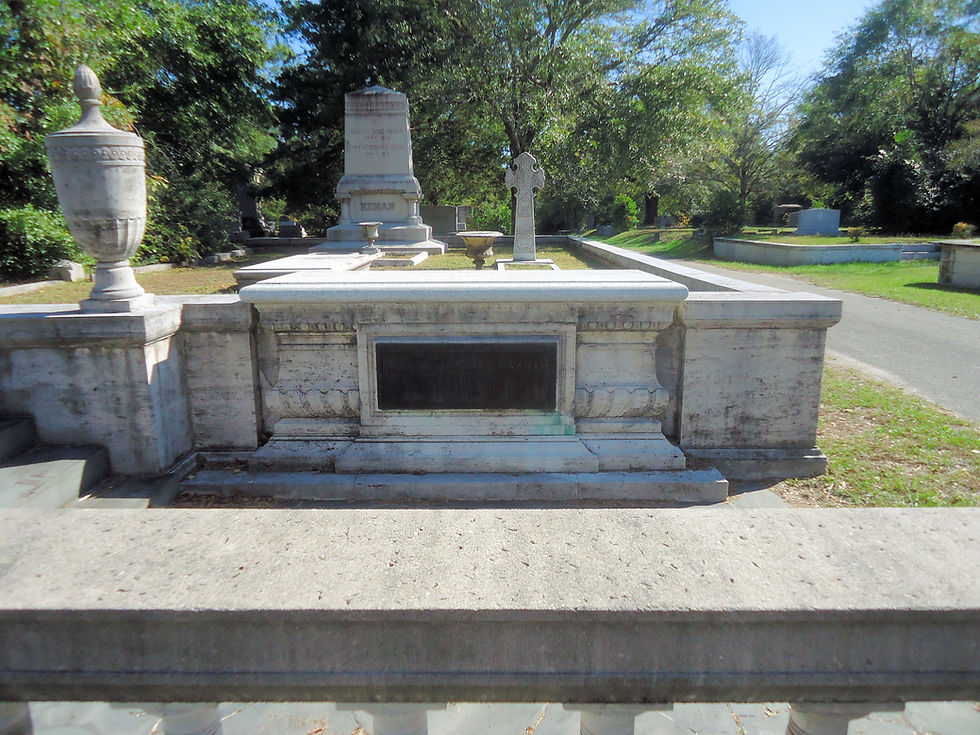


Her death certificate noted brain swelling and heart disease. The suddenness of her passing led her family to seek further examination, and she was quietly exhumed for a private autopsy. Although various accounts circulated, no official report was ever released and the circumstances surrounding her death have remained a subject of historical debate. Despite lawsuits and public speculation, no charges were brought against her husband or her physicians.


Comments