










Babe Paley
- Bobby Kelley
- 12 minutes ago
- 21 min read
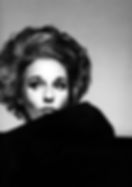
Barbara Cushing was born on July 5, 1915, in Brookline, Massachusetts, into a family where brilliance, discipline, ambition, and social expectation shaped nearly every corner of life. She was the youngest child of Dr. Harvey Williams Cushing and Katharine Stone Crowell Cushing, and from the beginning she belonged to a household unlike most others in America.
Her father was already one of the most important physicians of his generation. Harvey Cushing helped transform brain surgery from a dangerous and uncertain field into a modern medical discipline. He taught at Johns Hopkins, Harvard, and Yale, wrote with the same discipline with which he operated, and later won a Pulitzer Prize for his biography of Sir William Osler. In public, he was admired as a pioneer. At home, he was exacting, serious, and often absorbed by his work. Medicine demanded much of him, and he gave much of himself to it.
Her mother, Katharine, known in the family as Gogs, governed another kind of world. She understood society, marriage, manners, presentation, and the invisible rules that determined who was accepted and who was not. She raised her daughters with a clear understanding that beauty alone was never enough. A woman of their world had to know how to move through rooms, how to speak, how to arrange a household, how to charm without seeming eager, and how to become indispensable to the man she married.
Barbara was the fifth of five children. Her eldest brother, William, was followed by Mary Benedict, known as Minnie, then Betsey, then Henry, and finally Barbara. Within the family, the youngest child was called Baby, and over time Baby softened into Babe. The nickname would remain with her for the rest of her life, but before society claimed her as Babe Paley, she was Barbara Cushing, the youngest daughter in a family that expected its children to become extraordinary.
The Cushing children grew up between intellectual seriousness and social polish. Their father's achievements placed the family among America's most respected professional families, while their mother's ambitions connected them to a world of wealth, lineage, and marriage. Summers were spent at Little Boar's Head on the New Hampshire coast, where sea air, family rituals, and carefully observed manners formed part of Barbara's childhood landscape.
Barbara learned early that life could be beautiful, but never careless. In the Cushing household, order mattered. Taste mattered. Conduct mattered. Every gesture seemed to carry weight. For the daughters especially, the future was treated as something to be prepared for, not stumbled into.
Her sisters moved ahead of her into society first. Minnie and Betsey were older, glamorous, and increasingly visible. They were not merely pretty young women from a distinguished family. They were being shaped for the highest levels of American society. Barbara watched and learned. She saw how her mother managed ambition under the cover of propriety. She saw how marriages could alter a woman's position in the world. She saw how a room could be controlled without a raised voice.
In 1926, when Barbara was still a girl, tragedy struck the family. Her eldest brother, William, died in an automobile accident near New Haven while he was attending Yale. His death wounded the family deeply. Harvey Cushing threw himself further into work. Katharine was devastated. The loss added a shadow to the household, a reminder that even families of brilliance and privilege could not protect themselves from sudden grief.
Barbara was educated first in the manner expected of girls of her class, then at schools that prepared her for the life her mother imagined. She attended the Winsor School in Boston and later the Westover School in Middlebury, Connecticut. At Westover, she was bright, composed, and admired.

She graduated in 1933, entering adulthood during the Great Depression, when much of America was struggling and yet the rituals of elite society continued behind hotel doors, club entrances, and private dining rooms.
In October 1934, Barbara Cushing made her debut at the Ritz Carlton in Boston. The event drew attention. Four hundred guests attended, and the presence of Roosevelt sons reflected the widening reach of the Cushing family. Her sister Betsey, already married to James Roosevelt, helped host the evening. For Barbara, the debut marked her official entrance into society, but it also marked the beginning of a life in which she would be observed, praised, compared, and expected to perform perfection.
That same year, before the polish of her debut season had fully settled around her, Barbara was involved in a serious automobile accident while returning from a party on Long Island. Her front teeth were knocked out and her jaw was badly injured. She required extensive dental work and reconstruction. Later, rumors would grow around the accident, as though it had remade her face and created the beauty for which she became famous. That was too simple and too cruel a version of the truth. Barbara had already been admired before the accident. What the accident revealed was something else.
She met pain with composure.
During her recovery, when her young nieces came to see her, she covered the bruised lower half of her face with a chiffon handkerchief so they would not be frightened. Years later, when a friend noticed under black light that her teeth did not glow, Barbara laughed and explained that they were false. She did not dramatize the injury. She absorbed it, folded it into herself, and moved forward.
By 1935, Barbara wanted to be in New York with her sisters. She found an entry level job at Glamour magazine and began entering the world of fashion from the inside. New York in those years was fast, layered, restless, and alive with reinvention. For a young woman raised among Boston discipline and family expectation, Manhattan offered something different. It offered motion.

Barbara did not enter fashion as a distant admirer. She entered as someone with instinct. She had an eye for proportion, fabric, color, and gesture. She understood not merely what looked expensive, but what looked right. Her sense of taste was quiet but absolute. She seemed to know, almost without effort, how a scarf should fall, how a room should be arranged, how a dress should move, how a flower should be placed.
In 1939, she moved to Vogue as an editor in the fashion department. There she worked under powerful editors and among photographers, designers, artists, and writers who were helping define the modern language of style. Vogue gave her access to fashion at its highest level, but it also gave her a place to refine what already existed in her naturally. She learned about Paris, couture, photographers, fittings, deadlines, and the difference between fashion as clothing and fashion as image.
During these years, Barbara and her sisters became known as the Fabulous Cushing Sisters. Minnie, Betsey, and Babe were seen as a trio of American glamour, each one beautiful, each one socially ambitious, each one connected to men and families whose names carried power. Minnie would marry Vincent Astor. Betsey would marry first James Roosevelt and later John Hay Whitney. Barbara, the youngest, soon became the most admired of the three.
Her beauty was not conventional in the simple sense. Taken separately, her features were not delicate in the expected way. Her nose was strong, her jaw defined, her mouth fine, her face long and pale. But together those features created something unforgettable. She had dark eyes, luminous skin, sculpted bones, and a long neck that photographers loved. Her appearance did not merely photograph well. It suggested distance, intelligence, restraint, and mystery.

Men noticed her. Women studied her. Fashion people admired her. Yet those who knew her in youth remembered not only her beauty, but her kindness. She could be gracious to shy girls, attentive to small embarrassments, and capable of making others feel seen. That warmth would never be the part of her most photographed, but it was real.
While working at Vogue, Barbara met Stanley Grafton Mortimer Jr., a handsome sportsman from one of New York's old families. Stanley was everything her world understood and approved of. He came from high social standing, old connections, and inherited respectability. His mother descended from Standard Oil wealth. His father came from a line connected to John Jay, the first chief justice of the United States. To many observers, Stanley and Barbara seemed ideally matched. He was correct, handsome, and socially suitable. She was beautiful, poised, and rising.

They married on September 21, 1940, in East Hampton. The wedding was one of the notable social events of the season, though it carried an undertone of loss. Harvey Cushing had died in late 1939 and did not live to see his youngest daughter marry. Barbara entered married life without the father whose name had helped define her early world.
As Mrs. Stanley Mortimer, Barbara moved into the life expected of a young wife of her class. She and Stanley settled into an East Side triplex apartment. It was comfortable but not vast. They had enough money for a maid and a cook, but this was not yet the sweeping grandeur that would later surround her. In 1942, she gave birth to her son, Stanley Grafton Mortimer III, known as Tony. In 1944, her daughter Amanda was born.

Motherhood arrived during wartime. In 1943, Stanley joined the Navy and served in the Pacific. By the time he returned in 1945, he had changed. He drank heavily and suffered sharp changes in mood. The marriage deteriorated. On May 29, 1946, Barbara divorced him. She received a trust fund to support their two children, and Tony and Amanda remained in her custody.
By then, Barbara was already moving toward the man who would define the rest of her public life.
William S. Paley was the head of CBS, wealthy, powerful, ambitious, and restless. He had built a broadcasting empire and understood influence as deeply as Barbara understood presentation. He was not born into the old world that the Cushings and Mortimers occupied. He was the son of Ukrainian Jewish immigrants, and his family's fortune had begun in cigars before he transformed CBS into one of the most important communications companies in America.
Bill Paley was married when he and Barbara became involved, but his marriage to Dorothy Hart Hearst was already breaking apart. Dorothy was intelligent, stylish, and strong, but Bill wanted something different. He wanted a wife who would create the world around him, soften his edges, elevate his social standing, and reflect his success back to the world in human form.
Barbara represented all of that.

To Bill, she was not simply beautiful. She was the final polish on the life he was building.
To Barbara, Bill offered power, wealth, security, travel, art, houses, and entry into a scale of life far beyond anything her first marriage had provided. Her mother had reservations. Bill's Jewish background mattered in the prejudiced world they inhabited, and there were still clubs, drawing rooms, and families who saw him as an outsider no matter how rich he became. But Barbara was drawn to him. He was attentive, forceful, and fascinated by her.
Bill's divorce from Dorothy became final in July 1947. Four days later, on July 28, 1947, Barbara Cushing Mortimer married William S. Paley. She was thirty-two. He was forty-five.
They sailed aboard the Queen Elizabeth for a honeymoon in Europe, traveling through England, France, Italy, and Switzerland. Friends who saw them that summer thought they seemed like a dream couple. Bill looked at her with pride. He had married the woman who seemed to embody everything he wanted his world to become.
With that marriage, Barbara Cushing Mortimer became Barbara Cushing Paley, but to the public she would increasingly become something simpler and more powerful.
Babe Paley.

The Paleys' early married life unfolded between New York and Long Island. During the week, they lived in an elegant apartment at the St. Regis Hotel at 2 East 55th Street.

Billy Baldwin helped create rooms that were intimate, worldly, and unforgettable. The apartment was not immense by later Paley standards, but it possessed atmosphere. Red brown printed fabrics, French furniture, needlepoint carpets, a Venetian chandelier, and carefully chosen objects created a setting that felt both sophisticated and deeply personal.

Babe understood that rooms spoke. A room could flatter, impress, calm, seduce, or intimidate. She learned to create spaces where nothing seemed accidental. Flowers mattered. Light mattered. The placement of a chair mattered. Even luxury had to appear effortless.

Weekends belonged to Kiluna Farm in Manhasset, Long Island. Bill had purchased the estate before his marriage to Babe, but she transformed it. Originally built around 1910 for Ralph Pulitzer, the son of Joseph Pulitzer, Kiluna was an 80 acre world of lawns, gardens, rooms, cottages, and rituals. In Babe's hands it became far more than a country house. It became the center of Paley social life.
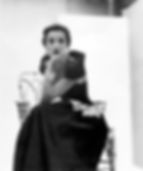
Every weekend, Kiluna filled with houseguests. Four or five couples might arrive for carefully orchestrated days of food, conversation, games, walking, drinking, swimming, and lingering dinners. Guests were pampered from the moment they entered. They did not unpack their own bags. Baths were drawn. Clothes were washed and returned folded. Bedrooms were filled with fruit, flowers, books, magazines, and newspapers. There were so many flowers that one guest remembered barely being able to enter a bedroom for the abundance of them.
Babe ran Kiluna with extraordinary precision. A staff of twelve helped maintain the world she imagined, but the vision was hers. She noticed everything. At dinner, she kept a small gold notepad beside her place. If a guest mentioned a book, if a detail of service failed, if something could be improved, she wrote it down. Perfection, for Babe, was not a mood. It was labor.
On March 30, 1948, Babe gave birth to William Cushing Paley, known as Billie. In 1950, her youngest child, Kate Cushing Paley, was born. With Tony and Amanda from her first marriage, and Bill's two children, Jeffrey and Hilary, from his marriage to Dorothy, the Paleys formed a blended family that appeared orderly from the outside. Three boys and three girls. Three pairs of children. A beautiful wife, a powerful husband, great houses, famous friends, and an expanding world of privilege.
The reality was more complicated.
Because the St. Regis apartment was considered too small and too adult for children, Tony, Amanda, Billie, and Kate grew up largely at Kiluna. Even there, they lived apart from the main house in a five bedroom cottage separated by a game room. The cottage had its own living room, kitchen, attic playroom, and rooms for the cook and nanny who oversaw them.

When Bill and Babe were at Kiluna, the main house was usually filled with guests, ringing telephones, cars in the drive, and the atmosphere of adult society. The children watched that world from nearby, close enough to feel its pressure and distant enough to feel its absence.
Babe was not a simple mother, and it would be unfair to make her one. She could be thoughtful, tender, and imaginative. She once dressed Billie for Halloween as a penguin in black felt and a white vest she had made herself. She could choose gifts with exquisite care. She tried to help Kate after the child developed alopecia universalis and lost all her hair. She found doctors, psychiatrists, and the best wigs money could buy, taking Kate to Kenneth's salon to have them cut and styled privately.
Yet there was distance too. Amanda later described the household as fragmented. The children, she said, clamored for attention when their parents appeared. Tony, handsome and sweet natured, became the child closest to Babe. Amanda, who inherited much of her mother's beauty, had a more difficult relationship with her. Kate, wounded by illness and by the burden of having a mother who embodied physical perfection, eventually rebelled. Billie, shy and troubled, struggled against the weight of his father's expectations and the strange atmosphere of a family where everything looked beautiful and much went unspoken.
Still, the public saw little of this.
The public saw Babe.
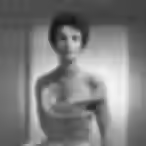
By the 1950s, she had become one of the most influential women in American fashion. She appeared again and again on best dressed lists, and by 1958 she was inducted into fashion's Hall of Fame. Women studied photographs of her as if they contained instructions. When she tied a scarf casually to her handbag because she was too warm, the look was copied everywhere. When she allowed her hair to gray naturally, other women followed. When she mixed real jewels with costume pieces, she made the combination seem not economical but modern. She understood the power of understatement in a world that often mistook display for elegance.

Bill liked visible proof of success. He gave her jewels, furs, and objects that announced wealth. Babe had a different instinct. Her true style depended on restraint, proportion, and surprise. She could wear diamonds wrapped around her wrist instead of at her throat. She could make a pantsuit look refined at a time when many society women still treated trousers as informal or daring. She could remove excess and leave only line, gesture, and presence.
Bill Blass once observed that people did not really notice what Babe wore. They noticed Babe.
Their houses multiplied and changed with their life. At Round Hill in Jamaica, which the Paleys bought in the early 1950s, their house sat on an outcropping of rock with a breathtaking view. It was a pavilion surrounded by bedrooms, furnished in bright chintzes of red, yellow, pink, and orange, grand in comfort but simple in spirit. Before the Paleys arrived for winter visits, a butler unpacked their luggage and filled the house with flowers.
They also spent time at Squam Lake in New Hampshire, in a house they called Kiluna North. It was large, rustic, lakeside, and private, with timber, porches, stone, docks, canoes, sailboats, tennis, bicycles, motorboats, and the feeling of a summer camp made chic. In 1957, during their tenth anniversary summer there, Babe gave Bill a Vuillard painting. Bill gave her a diamond rivière necklace. The next morning, she appeared at breakfast wearing one of her silk kimono style robes, daffodil yellow lined in milkshake pink, and instead of clasping the necklace around her neck she had wrapped it twice around her wrist.
That was Babe at her most instinctive.
She did not merely own beautiful things.
She knew how to make them new.
At Squam, she rose into her role as hostess with precision and grace. She wrote correspondence each morning. She offered cigarettes before taking one herself. She offered drinks before drinking. She complimented the cook, remembered the names of staff members' children, arranged outings, planned themed meals, and presided over the house without raising her voice. One dinner might be built entirely around clams, another around fresh corn. Oversized vases of rubrum lilies, flown from Manhasset greenhouses, scented the air. Bowls of lychee nuts stayed filled. There was no television, but there were books, conversation, boats, and the quiet expectation that every hour would be shaped.
Her manners were legendary, but manners can hide as much as they reveal.
Babe had been raised to create a world for her husband, and she did. But Bill Paley was not an easy man to please. He could be generous, charming, and attentive, but he was also demanding, restless, and controlling. He cared intensely about food, guests, rooms, art, schedules, and the impression created by every setting he occupied. Babe anticipated his wishes with almost painful devotion. She was never late to meet him. She did not criticize him in public. If a seating arrangement displeased him after she had labored over it, he might change it without regard for the effort she had made.
As the years passed, the marriage that had glittered so brightly began to harden into habit. Bill had affairs. Babe knew enough, suspected enough, and suffered enough. She did not wear that pain openly. She had not been raised to do so. Her distress appeared in migraines, smoking, private tears with her sister Betsey, and the quiet strain of a woman who had become the central ornament of a world that did not always nourish her.

She loved Bill. At least in the beginning, she seems to have loved him deeply. But over time she understood that she had also been acquired. He displayed her as proof of arrival, as he displayed paintings, houses, and invitations. He wanted a wife without peer. She became one.
In the mid 1950s, Babe met Truman Capote, and their friendship became one of the most important emotional relationships of her life. They met on a flight to Jamaica, and the connection was immediate. Truman was witty, strange, brilliant, and socially hungry. Babe was amused by him, then enchanted. Around him, people noticed that she changed. She laughed more freely. She whispered with him, danced with him, shared secrets with him, and let down some part of herself that usually remained guarded.
Capote adored her. He called her perfect, but what he loved was not only her perfection. He loved her access, her mystery, her sadness, her rooms, her confidences, and the way her life seemed to contain the very material he wanted to turn into art. He became one of her closest companions, part of the circle of men who could entertain her, flatter her, and give her warmth without threatening Bill.

In the world of Capote and the women later called his Swans, Babe occupied the highest branch. C. Z. Guest, Slim Keith, Gloria Guinness, Marella Agnelli, Lee Radziwill, and others formed a constellation of beauty, wealth, style, and social power. Capote moved among them as confidant and collector. To outsiders, it looked dazzling. To those inside, it depended on discretion.

Discretion was everything.
In 1965, the Paleys moved into a grand twenty room duplex at 820 Fifth Avenue overlooking Central Park. Unlike the St. Regis apartment, this home had the scale for serious entertaining. It also had room for the children, though by then the children were largely leaving home. The apartment became one of Manhattan's great private interiors. Sister Parish, Albert Hadley, Jansen, and Billy Baldwin all had roles in its creation. Art filled the rooms. The vestibule held Picasso's Boy Leading a Horse. The living room contained works by Van Gogh, Toulouse Lautrec, Bonnard, Rousseau, Monet, and Gauguin. The dining room, with its flattering tones of pink and salmon, became a stage for evenings of extraordinary polish.
On November 28, 1966, the Paleys hosted an early supper before Truman Capote's Black and White Ball at the Plaza Hotel. Guests included Lauren Bacall, Lee Radziwill, Prince Stanislas Radziwill, Philip Johnson, Katharine Graham, and Capote himself. Babe dressed for the ball in white, wearing a white shell dress and a white zibeline mask designed by Halston with a false ruby accent. It was simple and unforgettable, exactly the kind of choice that made other women look overdone by comparison.
Yet by the late 1960s, the beauty of the setting could not conceal the fractures beneath it. Kate and Billie had grown distant from the family. Amanda had married Carter Burden in 1964 in a grand wedding with a reception at Kiluna under a pistachio green tent filled with pink and white flowers. She became a famous beauty in her own right, and her emergence stirred complicated feelings in Babe. Tony remained closest to his mother. Bill and Babe increasingly lived separate emotional lives while continuing to function publicly as one of America's grand couples.
Babe also began to seek parts of herself outside the role she had been trained to perform. She went out in the mornings, often before ten. Sometimes she went to the Art Students League, where she studied drawing, painting, and sculpture. This artistic side of her was not widely known, but it mattered. She had always possessed an artist's eye. The rooms, clothes, flowers, tables, gardens, and gestures had been evidence of that all along. In another life, perhaps she might have made art openly. In the life she had, she made beauty through everything around her.
Her days had rituals. On Mondays and Fridays, she visited her hairdresser, first Kenneth and later Monsieur Marc. At the salon, she might eat a smoked salmon and cream cheese sandwich with a bottle of beer from William Poll. She read novels, shopped with purpose, chose gifts all year, and maintained the machinery of her world with relentless attention. She had secretaries trim the edges of stamps for invitations. She planned. She refined. She improved.

At Kiluna, her gardens became one of her most personal creations. Babe felt the original garden lacked mystery and seemed too enclosed. With the help of Russell Page, and with input from Henry Francis du Pont and Thomas Church, she reshaped the landscape into something more layered and secretive. A woodland dell became the heart of the design, with an oval pond known as the punch bowl, paths moving between shade and sun, Japanese azaleas, rhododendrons, dogwoods, oaks, tulip poplars, flowering groundcover, and the sense that the garden revealed itself slowly. It was not a formal display meant to impress at a glance. It was a place of discovery.
For a woman whose public life was constantly visible, a secret garden made perfect sense.
In the early 1970s, Babe was still appearing in society, still admired, still photographed, still carrying the burden of her own legend. But her body had begun moving toward illness.
In January 1974, doctors discovered a small tumor on one of her lungs. On January 18, at New York Hospital, Dr. Paul Ebert removed one third of the lung. The tumor was malignant, though doctors hoped the surgery had contained the disease.
Babe continued entertaining, though less often. She even gained some weight and ate chocolates. Then in spring 1975, another tumor appeared. On May 12, the rest of her right lung was removed. That summer, instead of traveling through Europe as usual, the Paleys stayed in Southampton at the villa of their friends Mica and Ahmet Ertegun. Babe was exhausted. She napped often and visited quietly with friends.
Bill responded to her illness with urgency and control. He searched for cures, consulted doctors, read about cancer, imported specialists, and used every connection he had. At first, Babe was moved by his attention. After her first operation, she told Slim Keith she had not known he cared so much. He ate every meal with her in the hospital, a devotion she found extraordinary.
But illness also changed her.
For the first time, she began questioning the life she had built. She spoke of her thwarted artistic talent and considered creating a studio outside the apartment where she could draw and sculpt. She criticized Bill more openly. The illness had stripped away some of the training that had kept her gracious at all costs.

Late in 1975, Truman Capote published "La Côte Basque, 1965" in Esquire. The story revealed the private cruelties, affairs, and secrets of the very society women who had trusted him. One of its episodes was understood to be aimed at Bill Paley and his infidelities. Babe was devastated. Capote had not merely written gossip. He had taken confidences, altered them, dressed them as fiction, and exposed them to the world.
For Babe, whose loyalty to family and privacy ran deep, it was unforgivable.
She never spoke to him again.
For a time in 1976 and 1977, the cancer seemed stable. But by autumn 1977, it had invaded her central nervous system. Nurses came in shifts. Bill reduced his time at CBS. Friends came to visit. Sometimes, if a dinner was held, Bill presided while Babe ate on a tray in her room, and afterward guests would come to her bedside.
She approached her illness like a doctor's daughter. She spoke plainly about treatments and prognosis. She became very thin and wore Valentino knits to soften the change in her body. Radiation and drugs caused her hair to fall out. Remembering Kate's childhood suffering from alopecia, she once looked in the mirror and said she now knew what Kate had gone through. When she did not wear a wig, she tied a chiffon scarf around her head like a turban.
During these months, relationships shifted. Tony visited every day. Amanda, whose relationship with her mother had long been painful and distant, drew close to her at last. Amanda later remembered that in the final three months Babe waited for her visits and walked with her. Those moments meant everything.
Babe also began arranging her departure with the same precision she had once given to guest rooms and dinner tables. She had her jewelry brought from the bank vaults and sat in bed surrounded by necklaces, rings, pins, bracelets, diamonds, rubies, pearls, sapphires, and emeralds. She examined each piece and decided who would receive it. She wrote bequests on file cards, not only for relatives but for friends. She planned her funeral, the flowers, the food, the wine, the atmosphere.
Even dying, she arranged beauty.
At Christmas 1977, Babe went to Lyford Cay in the Bahamas for the last time. She was so weak that she had to lie down during the flight aboard the CBS plane, covered by a full length blond Russian sable coat. Billie came from Washington, and she was overjoyed to see him, though his long hair, beard, and gold hoop earring irritated his father. It was the kind of detail that could have seemed comic in another family, but by then everything was edged with finality.
In early 1978, Babe's illness worsened. She became angrier with Bill and sometimes referred to him simply as Paley. She resented treatments that felt as if they were being forced upon her and complained that she had no say in her own life. Years of submission, disappointment, and compromise came pouring out. Those who witnessed it were shocked by the bitterness, but perhaps it was not bitterness alone. Perhaps it was the voice of a woman who had spent decades making herself pleasing and had finally run out of time to soften the truth.
By Easter, she had taken to her bed. Her King Charles spaniel, Softly, was often at her feet. She used oxygen but refused excessive tubes. Morphine eased her pain. In early June, as she entered the final stage of illness, she asked that nutrition be withdrawn gradually so her life would not be prolonged artificially. Bill, still unwilling to stop fighting, found an experimental treatment in Philadelphia. Nurses came by train with glass vials of medication. For a few weeks, Babe endured it, walking to keep her remaining lung working, but the family soon understood that it would not save her.
In mid June, Babe returned one last time to Kiluna. Bill, Tony, and Amanda accompanied her. They drove her around the grounds in a golf cart so she could see the gardens she had shaped and loved. Gardening had been one of the passions of her life. The woodland glen, the paths, the pond, the secret world of green and shade that she had helped create, all passed before her one final time. Exhausted, she retreated to a sofa in the library.
She said goodbye carefully. She called her former hairdresser Kenneth after years of silence and asked to be remembered to each of his employees. She invited friends to tea or lunch at her bedside. She gave makeup advice. She did not speak sentimentally of death. She remained Babe.

On July 5, 1978, her sixty-third birthday, the family summoned Kate, who had been long estranged and agreed to come only at the final moment. Babe was semiconscious but recognized her daughter. She wore a chiffon turban and a lace bed jacket. She did not complain. Even then, with a shaking hand, she put on her makeup.
The family gathered around her bed. Bill, Tony, Amanda, Billie, Kate, and the others kept vigil through the night. Early the next morning, on July 6, 1978, Barbara Cushing Paley died in New York City with Amanda holding her hand.
Several days later, four hundred mourners came to Christ Episcopal Church in Manhasset. Rockefellers, a Harriman, a Vanderbilt, designers, friends, family, and figures from the worlds of fashion, society, and power gathered to say goodbye. Oscar de la Renta and Horace Kelland were among the ushers. Bill Paley, in a dark suit tailored by Huntsman in London, walked with control but visible sorrow.
After the service, guests returned to Kiluna for an alfresco luncheon planned by Babe herself during the last year of her life. Waiters stood beneath the columned portico with silver trays of champagne and Pouilly Fumé de Ladoucette, her favorite wine. The rooms overflowed with flowers she had chosen. It was, in a sense, her final act as hostess.
There are women remembered because they were beautiful, and there are women remembered because they understood beauty as a language. Babe Paley belonged to the second kind.
Her public life was built around perfection, but perfection was never the whole truth. She was warm and distant, disciplined and wounded, playful and guarded, admired and lonely. She could make a house feel enchanted, a dinner feel effortless, a scarf become fashion, a garden become secret, and a child laugh by placing lettuce between her teeth. She could also retreat behind manners so polished that even those closest to her sometimes could not reach the woman beneath them.
Barbara Cushing entered the world as the youngest daughter of a brilliant surgeon and an ambitious mother. Babe Paley left it as one of the most studied women of the twentieth century. But between those two names lived a far more complicated human being than the photographs ever captured.
She spent her life creating beautiful worlds.
In the end, it is not the perfection that makes her unforgettable.
It is the cost of it.
Babe Paley was laid to rest at The Memorial Cemetery of St. John in Laurel Hollow, New York.
