


Frank Winfield Woolworth


Frank Winfield Woolworth was born on April 13, 1852, in the small farming community of Rodman in Jefferson County, New York, at a time when northern New York remained a landscape of rough farms, muddy roads, hard winters, and isolated rural settlements.
He was the eldest son of John Hubbell Woolworth and Fanny McBrier Woolworth, who struggled to maintain a modest farm while raising their family amid the economic uncertainties of mid-nineteenth century agricultural life. The farm demanded constant labor. Before dawn, chores began with milking cattle and feeding livestock, and by evening the work continued in fields where potatoes were dug by hand and crops gathered before the arrival of harsh weather from the Canadian frontier. Like many rural children of the era, Frank Woolworth grew up understanding labor long before he understood wealth.

His parents hoped their sons would eventually inherit the farm and continue the family’s agricultural life, but from an early age Frank showed little enthusiasm for farming. He possessed a restless imagination and an unusual fascination with trade, merchandise, and shopkeeping. Traveling peddlers occasionally passed through Jefferson County carrying household goods, fabrics, tools, and small luxuries from distant cities, and young Frank watched them with fascination. Family recollections later remembered him arranging objects and pretending to operate his own store while still a child. His younger brother Charles Sumner Woolworth, born in 1856, often played customer while Frank experimented with displays and imaginary transactions that foreshadowed the business empire he would one day create.
The Woolworth household was shaped by strict Methodist values emphasizing discipline, thrift, sobriety, and hard work. Money remained scarce. Mortgage payments weighed heavily upon the family, and every member of the household contributed labor to keep the farm operating. Frank attended local schools whenever farm work allowed, and his teachers considered him intelligent and diligent, though prone to daydreaming. The demands of rural life often interrupted his studies, but he developed a growing awareness that opportunities beyond Jefferson County existed in nearby Watertown, where railroads, dry goods stores, and commercial businesses represented a world very different from the fields where he spent his youth.
One childhood experience remained with him for the rest of his life. After saving loose coins together, Frank and his brother traveled into Watertown to purchase a birthday gift for their mother. The boys selected a silk headscarf from a store window, but clerks mocked them for attempting to pay in small change and treated them with open contempt. Humiliated, Frank left and purchased a similar gift elsewhere from a merchant who treated them kindly despite their modest means. Years later, Woolworth still remembered the incident and recalled promising that one day ordinary people would be able to enter stores where they could purchase quality merchandise cheaply and receive the same courtesy as wealthy customers. The memory helped shape the philosophy that later defined the Woolworth stores.
At sixteen years old, Frank left school and attempted to devote himself fully to farm work, but the labor exhausted him. He lacked the physical stamina for agricultural life and disliked the isolation of the countryside. Steam locomotives passing through Watertown captured his imagination, and he dreamed of escaping the farm entirely. Determined to pursue a different future, he persuaded his mother to help pay for bookkeeping courses at a commercial school in Watertown. After finishing chores each evening, he rode into the city for classes, studying accounting and commercial practices late into the night before returning home. Surrounded by students already employed in offices and stores, the awkward farm boy from Rodman began to believe he might someday enter the world of business himself.
As his confidence slowly grew, Woolworth sought employment in Watertown’s mercantile district. He possessed little polish and no experience, and repeated attempts to secure work ended in rejection. Eventually a family acquaintance named Daniel McNeil introduced him to the proprietors of Augsbury and Moore, one of Watertown’s leading dry goods stores. Frank arrived poorly dressed and lacking the refinement expected in urban retail establishments, but he impressed junior partner William Moore by offering to work for almost nothing while learning the trade. Moore reluctantly agreed to hire him as an apprentice in March 1873.
The young clerk’s early months in the store tested everyone’s patience. Woolworth was nervous with customers, socially awkward, and ineffective as a salesman. Yet Moore gradually discovered that the shy farm boy possessed unusual talents elsewhere. Frank excelled at organizing stockrooms, arranging merchandise, and constructing attractive displays. He carefully studied the goods that passed through the store, paying close attention to suppliers, pricing, customer behavior, and profit margins. Before long, he developed his own methods for displaying merchandise, often covering counters with bright red cambric cloth and placing large handwritten signs above the goods to attract attention. The displays proved remarkably effective. Customers stopped to examine merchandise they might otherwise have ignored, and Woolworth began learning that presentation itself could become a powerful sales tool.
Though still awkward in many respects, he became increasingly popular among fellow employees. Older women employed in the store treated him almost maternally, charmed by his blue eyes, humor, and determination. Woolworth never forgot those who encouraged him during these uncertain years, and throughout his later career he often rewarded former coworkers and early supporters with business opportunities inside the expanding Woolworth enterprise.
As he gained experience, Woolworth requested higher wages, but his employers refused. Frustrated, he accepted work with a competing merchant named A. A. Bushnell. The move proved disastrous. Bushnell valued conservative salesmanship over creative displays, and Woolworth struggled badly in the new environment. His nervousness returned, his salary was reduced, and the humiliation devastated him emotionally and physically. Exhausted and ill, he returned home to Rodman suffering what physicians described as nervous exhaustion.

During his recovery he became close to Jennie Creighton, a Canadian-born seamstress who occasionally worked for Augsbury and Moore and helped care for him during his illness. Jennie possessed calm determination and practical intelligence, qualities Woolworth depended upon throughout the rest of his life. The two married on June 11, 1876, in a simple ceremony held at the Woolworth family home. Later in life Frank often described Jennie as the stabilizing force behind his success.
With Jennie’s encouragement, Woolworth returned to Moore and Smith, where William Moore once again gave him employment. By this point the national economy had slowed, leaving many merchants burdened with unsold inventory. In 1877 Moore attempted to dispose of surplus merchandise by gathering inexpensive goods together on a special sales counter where every item cost five cents. He placed Woolworth in charge of the experiment. Frank arranged the display carefully beneath bright red cloth and positioned large signs prominently above the counter announcing that every article cost only five cents. Customers crowded around the table almost immediately, and the goods sold rapidly. Additional merchandise had to be ordered simply to keep the display stocked. Watching customers eagerly search through inexpensive merchandise, Woolworth began wondering whether an entire store devoted to low fixed prices might succeed.
The success of the five-cent counter convinced Frank Woolworth that customers responded not only to low prices, but also to simplicity and transparency. Most nineteenth-century stores still operated through bargaining, with prices varying from customer to customer and goods frequently hidden behind counters where clerks controlled access. Woolworth increasingly believed that ordinary people preferred the freedom to browse merchandise openly and purchase inexpensive items without embarrassment or negotiation. The idea remained unconventional, but he became determined to test it for himself.
In 1879 he approached relatives and acquaintances seeking financial backing for a store devoted entirely to inexpensive fixed-price merchandise. Most dismissed the idea as foolish. William Moore, however, still believed in his former apprentice and agreed to advance him approximately three hundred dollars in merchandise on credit. Armed with little more than borrowed stock, determination, and his growing understanding of customer behavior, Woolworth left Watertown and opened his first independent store in Utica, New York.
The experiment failed quickly. Though the concept attracted curiosity, the location proved poor and sales remained disappointing. Woolworth found himself once again facing humiliation and financial uncertainty. Many men might have abandoned the idea entirely, but he instead treated the failure as a lesson. Rather than returning permanently to Watertown, he searched for another location where he believed the concept might succeed.

He found that opportunity in Lancaster, Pennsylvania. On June 21, 1879, Woolworth opened the “F. W. Woolworth Great Five Cent Store” on North Queen Street. The opening day proved dramatically different from Utica. Customers crowded the store, fascinated by the fixed-price merchandise and the ability to examine goods freely without relying entirely on clerks. Receipts for the first day reportedly exceeded one hundred twenty-seven dollars, an extraordinary amount for the small operation. Woolworth later regarded Lancaster as the true beginning of his empire.
Success in Lancaster allowed expansion almost immediately. Within weeks he opened another location in Harrisburg under the management of his younger brother Charles Sumner Woolworth, who soon became one of the most important figures in the growing business. When difficulties arose with landlords or locations, the brothers simply relocated and tried again elsewhere. Stores soon appeared in Reading, Scranton, and additional Pennsylvania communities. Rather than treating setbacks as disasters, Woolworth increasingly viewed them as temporary obstacles within a much larger vision.
During the 1880s the Woolworth enterprise expanded steadily across the northeastern United States. Frank relied heavily upon trusted relatives, former coworkers, and longtime associates, many of whom eventually operated stores of their own. The loose network of related chains became known informally as the “Friendly Rival Syndicate,” a cooperative arrangement through which various partners shared suppliers, merchandising ideas, and purchasing power while technically maintaining separate operations. The arrangement allowed rapid growth while preserving a sense of independence among the participating owners.
Woolworth’s stores differed sharply from most retailers of the era. Merchandise was displayed openly rather than hidden behind counters. Large price signs eliminated uncertainty and bargaining. Goods were arranged carefully to encourage browsing and impulse buying. Small luxuries that working-class families might previously have considered unattainable suddenly became affordable. Cheap glassware, toys, notions, candy, stationery, ribbons, household goods, and imported novelties filled the shelves. Woolworth also pioneered purchasing directly from manufacturers, bypassing wholesalers whenever possible to reduce prices further. By studying customer habits obsessively, he transformed shopping itself into a new form of entertainment for ordinary Americans.
As his fortune increased, Woolworth gradually emerged from the awkwardness that had characterized his youth. Though never fully comfortable among society’s old elite families, he developed immense confidence in business matters and demanded high standards throughout his stores. He often appeared without warning at Woolworth locations across the country, inspecting merchandise, examining displays, and quietly observing employees and customers. Stories circulated that he occasionally tested clerks by pretending to shoplift inexpensive items simply to measure attentiveness. Managers who impressed him with diligence and honesty sometimes found themselves rewarded with promotions or opportunities to operate stores of their own.
Meanwhile his personal life evolved alongside the growing business empire. Frank and Jennie established increasingly comfortable homes as their wealth expanded, and their daughters entered the world one by one as the years progressed. Helena Maud Woolworth was born in 1878 during the uncertain early period of the business. Edna Woolworth followed in 1883 as the stores continued multiplying across the Northeast. Jessie May Woolworth was born in 1886, by which point the Woolworth name had already become widely recognized in American retailing.
Though devoted to his family in his own way, Woolworth spent much of his life traveling for business. Expansion required constant supervision, and he frequently remained away from home for extended periods while opening stores, inspecting operations, negotiating purchases, or traveling abroad to study merchandise and manufacturing techniques. He developed a fascination with European goods and frequently imported novelties, decorations, toys, and household items from overseas factories, particularly in Germany and other industrial centers where manufacturers could produce inexpensive merchandise in enormous quantities.
By the 1890s the Woolworth stores had become fixtures of American commercial life. Urban growth, industrialization, and the expanding purchasing power of the middle and working classes created ideal conditions for the five-and-dime concept. The Woolworth chain continued spreading through cities and towns across the United States and Canada while competitors rushed to imitate the model he had pioneered. Yet Woolworth remained ahead largely because he understood presentation better than almost anyone else in retailing. He believed stores should feel bright, lively, orderly, and inviting. Customers who entered intending to purchase a single inexpensive item frequently left carrying several.
As his wealth grew into the millions, Woolworth increasingly entered the world of America’s Gilded Age elite. Yet traces of the insecure farm boy from Jefferson County never disappeared entirely. Associates often remarked that despite his fortune he remained deeply attentive to small expenditures, pricing details, and daily sales figures. He never entirely lost interest in the mechanics of selling inexpensive merchandise, even after becoming one of the wealthiest merchants in the nation.
The turn of the twentieth century brought even greater expansion. Woolworth and his associates established stores in additional countries, and in 1909 the company expanded into Great Britain, where the concept proved enormously successful. British shoppers embraced the fixed-price model just as enthusiastically as American customers had decades earlier. Within only a few years dozens of stores operated across England, Scotland, Ireland, and Wales, extending the Woolworth name far beyond North America.
As the empire expanded internationally, Woolworth began contemplating a permanent monument to his success. New York City during the early twentieth century had become a landscape of increasingly ambitious skyscrapers erected by banks, insurance companies, railroads, and industrial corporations eager to display their power. Woolworth resolved that his own headquarters would surpass them all. In 1910 he commissioned architect Cass Gilbert to design a skyscraper unlike anything previously attempted.
Construction of the Woolworth Building transformed lower Manhattan. Rising in elaborate neo-Gothic form above Broadway, the immense tower combined commercial practicality with cathedral-like grandeur. Woolworth financed the approximately thirteen-million-dollar project largely in cash, astonishing observers throughout the financial world. When completed in 1913, the building stood 792 feet tall, making it the tallest building in the world. Newspapers and admirers quickly christened it the “Cathedral of Commerce.” Its soaring tower, pointed arches, terra cotta ornamentation, marble interiors, mosaics, and vaulted lobby transformed the headquarters of a five-and-dime store company into one of the defining architectural landmarks of modern New York.
The building represented more than wealth alone. To Woolworth it symbolized permanence, achievement, and legitimacy. The awkward clerk once mocked for paying with loose change had erected the tallest building on earth in the financial capital of the United States.

That same period also saw Woolworth constructing a vast private estate on Long Island’s Gold Coast. Winfield Hall, completed in Glen Cove around 1916, ranked among the grandest country houses in Nassau County. Designed by architect C. P. H. Gilbert, the mansion contained dozens of rooms and stood amid formal gardens and expansive grounds overlooking the increasingly fashionable North Shore estates occupied by America’s industrial aristocracy. Yet even as Woolworth achieved the social standing he had pursued for decades, strains within the family deepened.
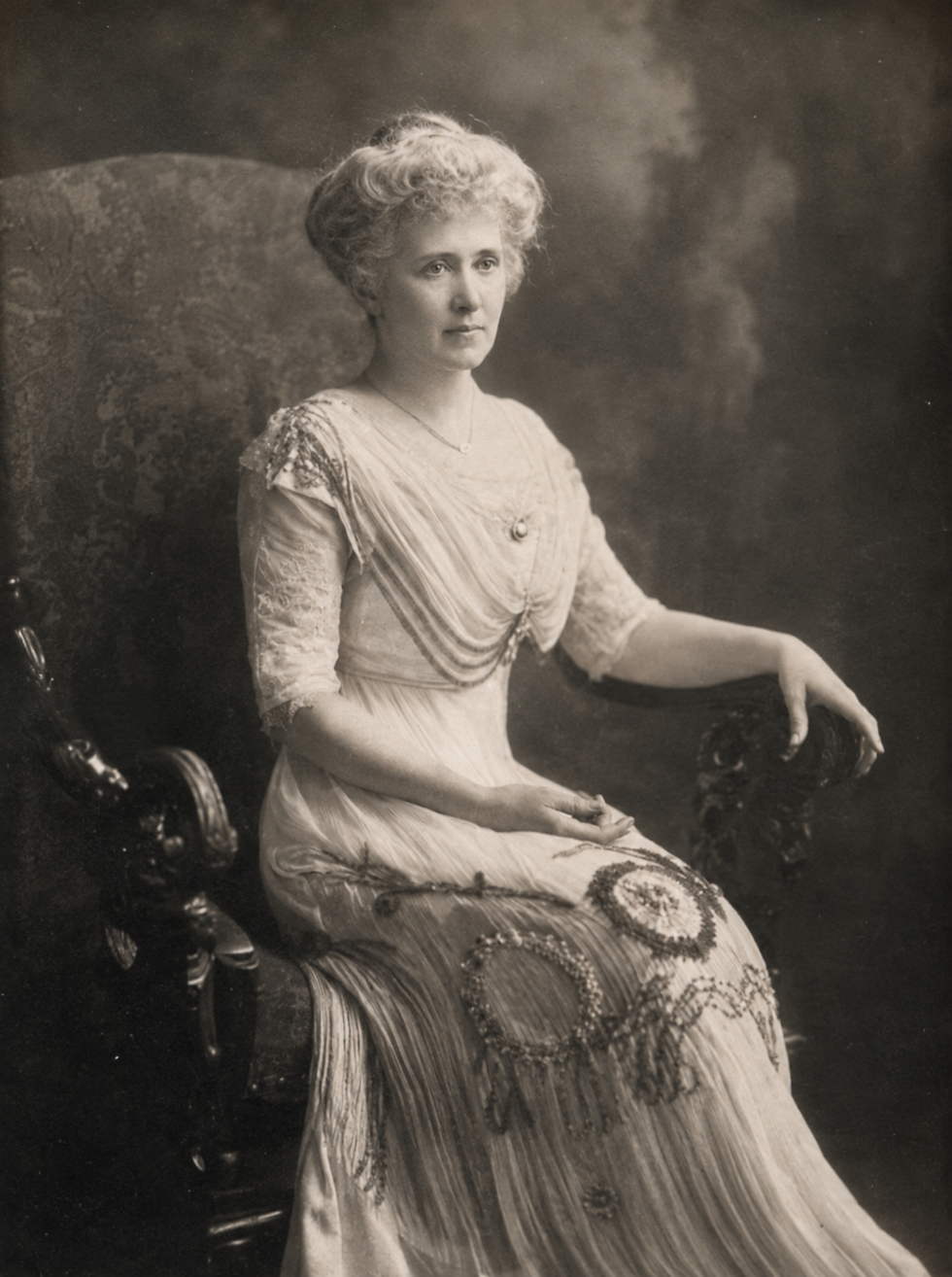
Jennie Woolworth struggled increasingly with declining mental health during the final years of her husband’s life. At the same time, tragedy struck the family when their daughter Edna died in 1917 at the age of thirty-four. Her death devastated Woolworth. The pressures of wartime business operations, family grief, advancing age, and relentless work gradually eroded his own health. During the First World War, disruptions to European manufacturing threatened many of the imported product lines upon which Woolworth stores depended. Rather than retreat, he aggressively sought American manufacturers capable of producing equivalent goods domestically, helping accelerate mass production techniques within the United States during the war years.
Despite declining health, Woolworth continued working almost until the end of his life. He remained intensely involved in business operations and was reportedly preparing elaborate fortieth anniversary celebrations for the Woolworth stores when he became seriously ill in early April 1919. What began as complications from an infected tooth quickly worsened. Surrounded by family members at Winfield Hall, Frank Winfield Woolworth died on April 8, 1919, only days before his sixty-seventh birthday.
News of his death spread rapidly across the United States and abroad. By then the Woolworth organization controlled more than one thousand stores and represented one of the greatest retail fortunes in the world. Newspapers described him as the “merchant prince” of the five-and-dime industry, a self-made businessman who had transformed American retailing through low prices, direct purchasing, mass merchandising, and fixed-price sales. Even rival retailers publicly honored him. Sebastian Spering Kresge, founder of the Kresge chain and one of Woolworth’s greatest competitors, reportedly closed his stores during the funeral out of respect.
The final complication of Woolworth’s life emerged almost immediately after his death. Though he had spent years preparing a new will intended to reorganize his immense fortune, the document remained unsigned when he died. As a result, an earlier will executed decades before, when he was still comparatively poor, governed the estate. Jennie Woolworth inherited virtually the entire fortune despite her declining mental condition, creating enormous legal and financial complications surrounding one of America’s largest estates.
Following funeral services attended by family members, business associates, and prominent figures from the worlds of finance and commerce, Woolworth was entombed at Woodlawn Cemetery in the Bronx, New York, within the monumental Woolworth Mausoleum. Constructed in the Egyptian Revival style and built of pale Barre granite, the mausoleum reflected the same ambition and permanence that had defined the Woolworth Building and Winfield Hall. Massive sloping walls, sphinxes, carved ornament, bronze doors, and carefully designed interior crypt spaces transformed the structure into one of the great private mausoleums of Woodlawn Cemetery. Architectural drawings, engineering plans, landscape designs, and specifications for the monument survive within the cemetery archives, documenting the extraordinary care devoted to its creation.
Over time the mausoleum became not simply Frank Woolworth’s resting place, but the burial site of multiple generations connected to the Woolworth fortune and family legacy. His daughter Edna Woolworth Hutton, whose death deeply affected him during his final years, was entombed there before him in 1917. Jennie Creighton Woolworth joined her husband within the mausoleum after her death in 1924. Other family members followed across the decades, including Jessie Woolworth Donahue and later descendants tied to one of the most famous inherited fortunes in American history.
Among the most notable later entombments was Barbara Hutton, Woolworth’s granddaughter and the daughter of Edna Woolworth Hutton. Known internationally as the “Poor Little Rich Girl,” Barbara Hutton became one of the wealthiest and most scrutinized heiresses of the twentieth century, her life marked by extraordinary wealth, celebrity, marriages to aristocrats and public figures, and profound personal loneliness. Despite the glamour and tragedy surrounding her life, she ultimately returned to the family mausoleum created by her grandfather, the former farm boy from Jefferson County who had built the five-and-dime empire.
Also entombed within the mausoleum was Barbara Hutton’s son Lance Reventlow, the racing driver, entrepreneur, and creator of the Scarab sports car, whose life reflected the changing world of postwar American wealth and celebrity before his death in an aviation accident in 1972. Through succeeding generations the Woolworth Mausoleum endured not only as the resting place of Frank Winfield Woolworth himself, but also as a lasting monument to the rise, expansion, triumphs, tragedies, and enduring legacy of the Woolworth family.


as always so interesting!