


Abraham Kingsley Macomber


Abraham Kingsley Macomber was born 7 March 1875 in Morristown, New Jersey, the son of Henry Kirke Macomber and Amelia Montague Collerd. While still young he moved with his family to Pasadena, Los Angeles County, California, where his father became known locally as Dr. H. K. Macomber. Kingsley grew up in a city that was expanding in the closing years of the nineteenth century, and later reminiscences recalled him as one of the boys of early Pasadena, first on El Molino Avenue and later on Colorado Street.
As a young man he developed strong interests in horses and travel. In 1894 he joined Frederick Russell Burnham and a small party of Americans on an expedition into Central Africa. The group spent approximately six months surveying and mapping mineral regions in what is now Zimbabwe. During hostilities associated with the Matabele uprising, they were caught in the Siege of Bulawayo, where a small force held out until relieved by British troops. After leaving Africa, Macomber traveled to London and was later associated with the Royal Geographical Society before returning to the United States.
By the late 1890s his name appeared frequently in connection with Southern California horse shows and sporting events. In March 1899 newspapers announced his engagement to Laura Myrtle Harkness of New York City. She was the daughter of Lamon Vanderburgh Harkness. The marriage was celebrated 27 September 1899 at the Harkness residence on Fifth Avenue in Manhattan, with Rev. Dr. Wilton Merle Smith officiating. Afterward, Kingsley and Myrtle divided their time between New York and Pasadena.

Their daughter, Priscilla Amelia Macomber, was born 22 May 1902 in Pasadena. She died there 10 March 1903.
Rancho Cienega de los Paicines

During the first decade of the twentieth century Macomber acquired Rancho Cienega de los Paicines in San Benito County, California. The ranch encompassed thousands of acres and operated as a large scale cattle and horse enterprise. Contemporary accounts described extensive herds, saddle horses, ranch employees, and a substantial main residence supported by outbuildings. The property became both a working agricultural operation and a base for his bloodstock interests.
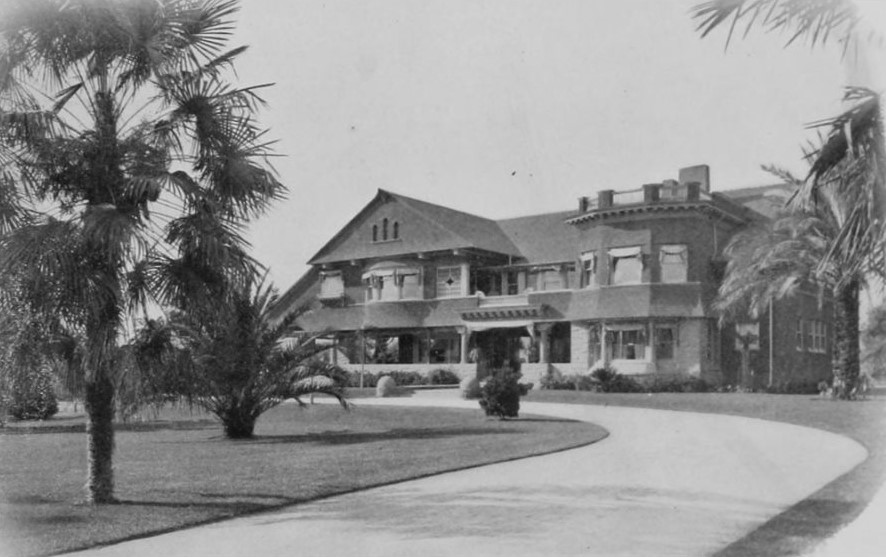
A Pasadena feature in 1907 presented his South Orange Grove Avenue residence and its orchid collections. Two years later, on 23 March 1909, his father Henry Kirke Macomber died in Pasadena. Reports in 1910 placed Macomber abroad and noted his purchase of a Bleriot monoplane, reflecting his interest in early aviation. His activities increasingly alternated between California and Europe.
Horse racing became the dominant public element of his life in the 1910s. His colt Star Hawk finished second in the 1916 Kentucky Derby.

In 1918 his colt War Cloud ran fourth in the Kentucky Derby and later won the Preakness Stakes. His stable won other major American races including the Travers Stakes, the Suburban Handicap, and the Withers Stakes. When anti betting legislation in 1911 disrupted racing in the United States, Macomber shifted substantial operations to Europe. By 1919 the Paicines ranch was reported in connection with a significant lease arrangement while his racing interests were increasingly centered overseas.
In 1920 he purchased the racing establishment of William K. Vanderbilt in France, including bloodstock and training facilities. From that point forward he was regularly identified in American newspapers as an American sportsman residing in Paris. His horses competed successfully in major European races. In 1923 his colt Parth won the Prix de l'Arc de Triomphe at Longchamp. Gold Bridge won the King's Stand Stakes at Royal Ascot in 1933 and again in 1934.

During these European years he owned the steam yacht Crusader, which was counted among the notable yachts seen in prewar Deauville. Rancho Cienega de los Paicines was sold in 1927.
On 23 June 1928 his brother Henry Jewell Macomber died in San Francisco. By the early 1930s Macomber's base was firmly in France, though he continued to maintain residences in the United States, including Pasadena, New York City, and Stamford, Connecticut. On 5 April 1932 his mother, Amelia Montague Collerd Macomber, died in Seattle.
During the 1930s his name continued to appear in racing coverage in both Europe and the United States, and he was frequently described as a leading American owner abroad. In 1941 newspapers reported that his extensive natural history collection, assembled over many years and associated with Frederick Russell Burnham, remained stored near Paris during the war. On 3 December 1944 his brother Leroy Alexander Macomber died in San Francisco.
After the Second World War he continued to reside in France while retaining ties to the United States. Abraham Kingsley Macomber died 5 October 1955 at the Hotel Ritz in Paris, France. He was returned to New York and was entombed 8 June 1956 in the Harkness Mausoleum.


Seminole

For interior photos Click Here


Comments