


Anne Rice


Howard Allen Frances O’Brien was born in New Orleans, Louisiana, on October 4, 1941, the second of four daughters born to Howard James O’Brien and Katherine Rita Allen O’Brien. The name was unusual for a little girl, and from the beginning it seemed to place her between expectation and invention. Her father worked for the United States Postal Service, and her mother, remembered as imaginative and emotionally vivid, helped shape the inner world of the child who would one day become Anne Rice. The family was Irish Catholic, and Anne’s earliest years unfolded in a New Orleans where faith, ritual, family, death, and memory were woven into daily life.
She grew up in a city that seemed already made for storytelling. New Orleans was not only the place of her birth, but the first landscape of her imagination. Its churches, old houses, iron balconies, processions, Catholic feast days, and above-ground cemeteries formed the background of her childhood long before they became part of her fiction. She did not have to invent a city where beauty and decay stood beside one another. She had been born into one.
As a small child, she attended St. Alphonsus School, where Catholicism surrounded her in color, sound, and ceremony. The statues, candles, saints, stained glass, incense, prayers, and stories of sacrifice left deep impressions on her. This was not a casual childhood faith. It was immersive. It gave her a language for sin, redemption, suffering, eternity, and the soul. Even after she later lost that faith, the imagery and questions of Catholicism never left her.
It was also at school that Howard O’Brien became Anne. When asked her name, she chose Anne, a name she preferred and one that felt like her own. Her mother did not correct her. From that point forward, the girl born Howard Allen Frances O’Brien lived publicly as Anne. It was a small childhood decision, but it carried the first hint of a theme that would follow her for the rest of her life: identity could be remade.
Through the 1940s and early 1950s, Anne’s world was shaped by women, family, Catholic schooling, and the emotional atmosphere of home. Her mother’s presence was especially powerful. Katherine O’Brien encouraged imagination, and Anne later remembered her as a major influence on her creative life. But Katherine also struggled with alcoholism, and that struggle darkened Anne’s childhood.
In 1956, when Anne was fourteen, her mother died. The loss changed the course of her life. It was not only the death of a parent. It was the first great rupture in Anne’s emotional and spiritual world. The faith that had once seemed certain became more difficult. Death was no longer an image in a church window or a story told by priests. It had entered her own home.
After Katherine’s death, the family life Anne had known began to break apart. Her father eventually remarried, and in 1958 he moved the family to Richardson, Texas. For Anne, the move carried her away from New Orleans, away from the streets and churches that had shaped her, and into a very different world. Texas was not the city of her childhood. It was new, bright, suburban, and unfamiliar.
At Richardson High School, Anne met Stan Rice. He was a young poet and artist, and he would become the central relationship of her adult life. They met not as literary celebrities, not as the famous novelist and the poet she would later marry, but as teenagers drawn to words, imagination, and one another. Stan understood the artistic part of Anne before the world knew it existed.
Anne graduated from Richardson High School in 1959. She attended Texas Woman’s University in Denton, but money was limited, and her path was not simple or polished. She was ambitious, restless, and already moving toward a larger life, though she could not yet know what form it would take.
By 1960, Anne had gone west to San Francisco. The move was one of the first major acts of independence in her life. New Orleans had given her memory, Catholicism, and atmosphere. Texas had given her Stan. California would give her reinvention.

On October 14, 1961, Anne O’Brien married Stan Rice. She was twenty years old. The marriage joined two young people who believed in art, language, and the life of the mind. It also began the partnership that would carry Anne through motherhood, grief, poverty, ambition, literary rejection, fame, faith, doubt, and loss. Before the vampires, before the mansions, before New Orleans made her a legend, there was Anne and Stan, young and newly married, stepping into California and into the life that would make her Anne Rice.
The newlyweds settled in California, a place that would become just as important to Anne's development as New Orleans had been to her childhood. While she never stopped thinking of New Orleans as home, California became the landscape of her adulthood. It was where she continued her education, where she became a mother, where she experienced her greatest heartbreak, and where she eventually found her path as a novelist. During the early years of their marriage, money was often limited, and like many young couples they balanced work, school, and family responsibilities while pursuing artistic dreams that offered no guarantees of success.
As the 1960s progressed, Anne continued her studies while Stan developed as a poet. California was in the midst of tremendous cultural change. New ideas about politics, religion, art, and personal freedom were transforming the state, particularly in and around San Francisco. Anne absorbed these influences while remaining deeply connected to the memories and traditions of her New Orleans upbringing. The tension between old beliefs and new ideas would become one of the defining characteristics of her writing.
On September 21, 1966, Anne and Stan welcomed their daughter Michele. Her arrival brought enormous joy to the young couple. Michele quickly became the center of their world, and much of Anne's attention shifted toward motherhood. The future bestselling novelist was still largely unknown, and during these years her life revolved around family rather than literary success. She continued writing and reading whenever she could, but her primary role was that of wife and mother.
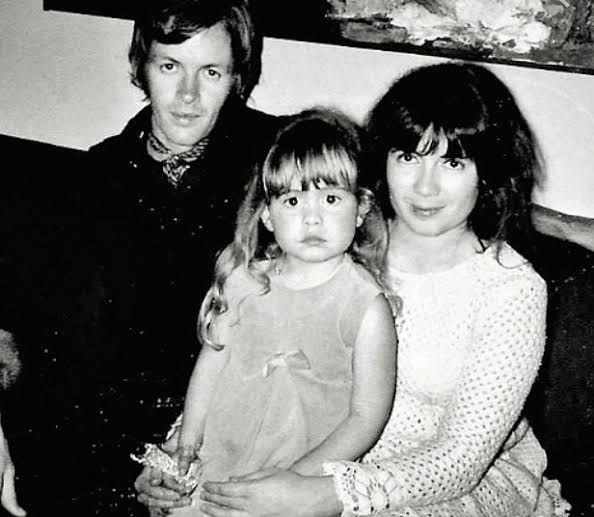
The happiness of those years was shattered in 1972 when Michele was diagnosed with acute granulocytic leukemia. Suddenly Anne and Stan found themselves facing a reality no parent is ever prepared to confront. Their lives became consumed by doctor visits, treatments, hospital stays, and the desperate hope that their daughter would recover. For months they watched Michele endure illness and procedures far beyond what any child should have to face. The experience was emotionally exhausting and spiritually devastating.
On August 5, 1972, only weeks before her sixth birthday, Michele died. The loss left Anne and Stan overwhelmed by grief. For Anne in particular, Michele's death reopened wounds that had never fully healed after the loss of her mother years earlier. Questions about suffering, death, and God's silence returned with a force she could not ignore. The faith that had once given meaning to her childhood seemed unable to provide satisfactory answers. In the months that followed, she struggled to make sense of a world that could allow the death of a child.
Yet grief did not silence her imagination. If anything, it intensified it. During 1973, Anne turned increasingly toward writing as a way to process emotions that seemed impossible to express otherwise. What began as a story about a vampire telling his life story gradually evolved into something much larger. The character of Louis de Pointe du Lac emerged as a figure burdened by loss, guilt, loneliness, and existential questions. As the manuscript developed, another character appeared: Claudia, a child vampire forever trapped in the body of a little girl. Readers would later recognize the emotional connection between Claudia and the daughter Anne had lost. Whether consciously or unconsciously, Anne was transforming personal tragedy into fiction.

The resulting manuscript became Interview with the Vampire. Unlike traditional vampire stories, Anne's novel focused less on horror and more on the emotional consequences of immortality. Her vampires questioned morality, searched for meaning, wrestled with faith, and mourned the people they had lost. The themes that filled the book reflected many of the same questions Anne herself had been struggling to answer since Michele's death. Rather than portraying vampires as monsters, she presented them as complex, thoughtful, and deeply human beings.
Completing the manuscript was only the beginning. Publication did not arrive overnight, and Anne spent time navigating the uncertainties familiar to many aspiring writers. The novel eventually found a publisher, and in 1976 Interview with the Vampire was released. The book attracted attention almost immediately because it offered something readers had not encountered before. Anne had reinvented the vampire, transforming a traditional villain into a tragic and philosophical protagonist. Critics noticed the originality of her approach, while readers responded to the emotional depth of the story.
The publication of Interview with the Vampire marked the beginning of Anne Rice's literary career, but it did not instantly transform her into a household name. That would come later. For the moment, she was a novelist whose first major work had found an audience, proving that the years she had spent writing through grief and uncertainty had not been in vain.
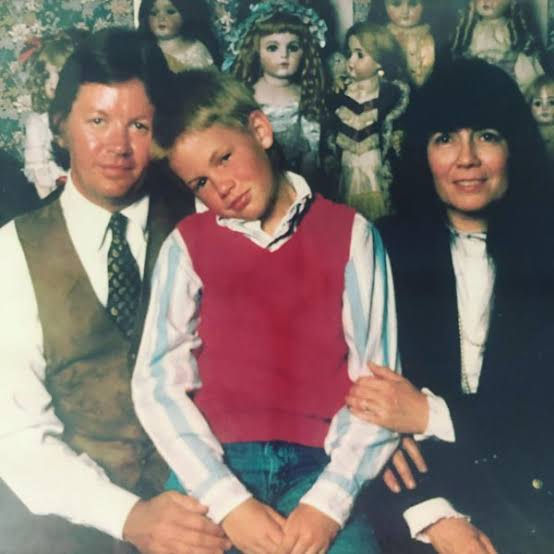
Two years later, in 1978, Anne and Stan welcomed their son Christopher. His birth brought new joy into a household that had endured profound loss. While Michele's memory remained a constant presence in their lives, Christopher's arrival helped the family look toward the future. At the same time, Anne's writing career was beginning to gather momentum.
The young woman who had left New Orleans years earlier in search of a life beyond her childhood had now become a published author, a wife, a mother, and a survivor of unimaginable grief. The next chapter of her life would bring literary fame on a scale she could never have anticipated.

The publication of Interview with the Vampire in 1976 marked the beginning of Anne Rice's professional career, but it did not immediately make her one of the most recognizable authors in the world. The novel found a loyal readership and strong critical attention, yet the phenomenon that would later surround her name was still years away. During the late 1970s, Anne continued writing while raising Christopher and building a life with Stan in California. The success of her first novel proved she had found an audience, but she was still searching for the direction her career would ultimately take.
In the years that followed, Anne explored a variety of projects. She wrote historical fiction, horror, and even erotic works under pseudonyms. She was a disciplined writer, producing manuscripts while balancing family life and continuing to develop her craft. Although Interview with the Vampire had introduced readers to Louis and Lestat, the world she had created was not yet the vast literary universe it would become. That transformation began in the early 1980s.

By 1985, nearly a decade after the publication of her first vampire novel, Anne returned to the characters that had launched her career. The Vampire Lestat shifted the focus away from Louis and placed the flamboyant, rebellious French vampire at the center of the story. The gamble paid off spectacularly. Lestat de Lioncourt quickly became one of the most beloved and recognizable figures in modern fiction. Charismatic, arrogant, philosophical, passionate, and endlessly entertaining, he captivated readers around the world. For many fans, Lestat became inseparable from Anne herself. Both challenged convention, questioned authority, and refused to fit neatly into expectations.
The success of The Vampire Lestat elevated Anne to an entirely new level of literary prominence. Readers who had admired Interview with the Vampire now found themselves immersed in a growing mythology stretching across centuries and continents.
Anne's vampires were unlike any that had come before them. They were not merely creatures of horror. They were intellectuals, artists, skeptics, believers, lovers, and philosophers.
Through them, Anne explored subjects that had fascinated her since childhood: the nature of evil, the existence of God, the burden of immortality, and the longing for meaning in an uncertain world.

Three years later, in 1988, Anne published The Queen of the Damned. The novel expanded the mythology of the Vampire Chronicles and cemented her reputation as one of the most important voices in modern gothic fiction. By this point, readers eagerly awaited each new installment, and Anne's audience continued to grow with every publication. What had begun as a deeply personal novel born from grief was evolving into one of the most successful literary franchises of the late twentieth century.
The year 1988 brought another significant change. After decades spent primarily in California, Anne returned to New Orleans. The city that had shaped her childhood imagination once again became the center of her daily life. Returning was more than a change of address. It represented a reunion with the place that had never stopped influencing her work. Readers already associated Anne Rice with New Orleans, but now she was once again living among the streets, churches, architecture, and history that had inspired her fiction.

In 1989, Anne and Stan purchased the house at 1239 First Street in the Garden District. Built in 1857, the imposing residence quickly became one of the most famous private homes in New Orleans.
Visitors traveled from around the world hoping to catch a glimpse of the place where Anne lived and worked. The house would later inspire the fictional Mayfair Manor that appeared in her enormously successful Mayfair Witches novels. More importantly, it became the backdrop for some of the most productive years of her career.

The early 1990s saw Anne expand beyond vampires with remarkable success. In 1990, she published The Witching Hour, introducing readers to the Mayfair family and opening an entirely new chapter in her literary career.
Rich in history, family secrets, supernatural intrigue, and New Orleans atmosphere, the novel demonstrated that Anne's talent extended far beyond a single series. The Mayfair Witches quickly developed a devoted following and became one of the defining achievements of her career.
As Anne's popularity grew, New Orleans itself became increasingly linked to her public image. Readers arrived in the city searching for locations described in her books. Walking tours highlighted places associated with her characters. Fans gathered outside her homes, visited the churches and cemeteries that appeared in her novels, and treated New Orleans almost as an extension of her fictional universe. Few modern writers have become so closely identified with a particular city.
In 1993, Anne purchased St. Elizabeth's, a former orphanage occupying an entire city block on Napoleon Avenue. The massive complex became one of the most talked-about private residences in America. Filled with books, artwork, religious artifacts, antiques, and personal collections, it reflected the wide range of Anne's interests. The property became both a home and a symbol of her success, standing in dramatic contrast to the years when she and Stan had struggled financially as young artists in California.

During this period, Anne also became known for her extraordinary doll collection. Over nearly two decades, she assembled more than eight hundred dolls, many of them rare or custom-made. The collection fascinated visitors and reflected her lifelong attraction to beauty, memory, history, and the preservation of the past. Like many aspects of Anne's life, it was often misunderstood by outsiders but made perfect sense when viewed alongside her fiction, which frequently explored themes of permanence, loss, and the desire to hold onto what time threatens to take away.
The greatest expansion of Anne's audience came in 1994 with the release of the film adaptation of Interview with the Vampire. Directed by Neil Jordan and starring Tom Cruise, Brad Pitt, Kirsten Dunst, Antonio Banderas, and Christian Slater, the film introduced Anne's work to millions who had never read her novels. The production generated enormous publicity and reignited interest in the Vampire Chronicles. Although Anne initially expressed concerns about casting decisions, she later praised Cruise's performance as Lestat. The film's success ensured that her characters would become part of popular culture far beyond the literary world.

By the mid-1990s, Anne Rice was no longer simply a successful novelist. She had become a cultural phenomenon. New books debuted to enormous anticipation. Readers traveled great distances to attend signings and appearances. Fan communities flourished. Long before social media transformed author-reader relationships, Anne cultivated a direct and unusually personal connection with her audience. She welcomed readers into her world and often engaged with them in ways few bestselling authors attempted.
The late 1990s brought additional entries in both the Vampire Chronicles and the Mayfair Witches series. With each new novel, Anne expanded the mythology she had been building since the 1970s. Her books sold in the millions, were translated into numerous languages, and established her as one of the most commercially successful authors of her generation. Yet despite the fame, the central themes remained remarkably consistent. Whether writing about vampires, witches, angels, or historical figures, Anne continually returned to questions of faith, identity, mortality, redemption, and the search for meaning.
The decade closed with a series of personal challenges. In December 1998, Anne was hospitalized after slipping into a diabetic coma. Doctors diagnosed her with Type 1 diabetes, a condition that would require lifelong management. The experience was frightening for both Anne and her family and served as a reminder that even as her literary success continued to grow, she was not immune to the vulnerabilities of ordinary life. At nearly the same time, another crisis emerged when Stan Rice was diagnosed with glioblastoma, an aggressive form of brain cancer. For a couple who had already endured the loss of a child, the years ahead would prove among the most difficult of their lives.
The new century brought profound changes to Anne Rice's life. By the early 2000s she had achieved a level of success few authors ever experience. Her novels had sold millions of copies around the world, New Orleans had become inseparable from her public image, and generations of readers had embraced the worlds she created. Yet behind the fame, her attention was increasingly focused on matters far more personal than book sales or literary success.
In 1998, Stan Rice was diagnosed with glioblastoma, an aggressive form of brain cancer. For Anne, the diagnosis was devastating. Stan had been at her side since their teenage years in Texas. They had built a marriage that had survived financial struggles, creative frustrations, the loss of a child, and the extraordinary pressures of fame. For more than four decades, he had been her partner, confidant, and closest companion. As his illness progressed, Anne found herself confronting another loss she could not prevent.
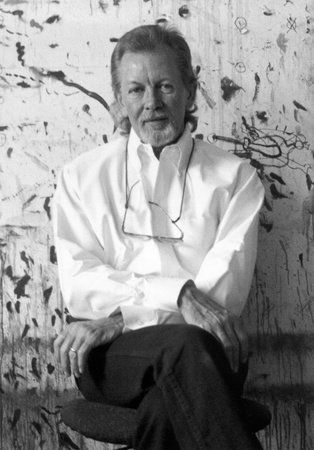
Stan Rice died on December 9, 2002, in New Orleans. His death ended a marriage that had lasted forty-one years. The loss was profound. Anne had already endured the deaths of her mother and daughter. Now the man who had shared nearly every chapter of her adult life was gone as well. Friends and readers would later observe a noticeable shift in her writing and outlook during the years that followed. The confident public figure remained, but grief once again became a central force in her life.
The years immediately after Stan's death were marked by change. Anne gradually left New Orleans and eventually returned to California, settling closer to her son Christopher. The move represented the end of one era and the beginning of another. New Orleans would always remain central to her identity, but California once again became her daily home.
At the same time, Anne experienced a dramatic spiritual transformation. For decades she had wrestled with faith, doubt, and questions about God. The death of her mother had shaken her childhood Catholicism, and the death of Michele had deepened those struggles. Yet in the years following Stan's death, Anne publicly embraced Christianity once again. The return surprised some readers who knew her primarily through her vampire novels, but for Anne it represented the continuation of a lifelong search rather than a sudden change in direction.
That renewed faith soon appeared in her work. In 2005 she published Christ the Lord: Out of Egypt, followed by Christ the Lord: The Road to Cana in 2008. These novels reflected her desire to explore the life of Jesus through fiction while examining the spiritual questions that had occupied her for decades. Some longtime fans were surprised by the shift away from vampires and the supernatural, but Anne saw these books as part of the same conversation she had always been having. Whether writing about Lestat or Christ, she remained fascinated by questions of suffering, redemption, love, and the search for meaning.
Her spiritual journey continued to evolve. In 2010, Anne publicly announced that while she remained committed to Christ, she could no longer identify with organized Christianity. The statement attracted widespread attention and reflected her independent nature. Throughout her life, Anne had resisted being confined by institutions, labels, or expectations. Even in matters of faith, she followed her own path.
Despite the changes in her beliefs, Anne never lost her connection with readers. As social media transformed communication, she embraced it enthusiastically. Millions followed her thoughts, observations, and conversations online. She remained remarkably accessible for an author of her stature, engaging directly with readers and maintaining relationships with fans who had followed her work for decades.

Meanwhile, Christopher Rice established a successful literary career of his own. Mother and son shared not only family bonds but also a profession. Writing remained one of the defining threads connecting generations of the Rice family, and Anne took great pride in Christopher's accomplishments.
As the 2010s progressed, readers began to wonder if she would ever return to the vampires that had made her famous. The answer arrived in 2014 with the publication of Prince Lestat. The novel reunited readers with characters they had loved for decades and demonstrated that Anne's fascination with the Vampire Chronicles remained alive. Additional novels followed, expanding the mythology she had begun more than forty years earlier with Interview with the Vampire.
By this stage of her life, Anne Rice occupied a unique place in American literature. Few authors have transformed an entire genre as completely as she transformed vampire fiction. Before Anne Rice, vampires were largely monsters. After Anne Rice, they became tragic, seductive, philosophical, and deeply human figures. Her influence extended far beyond books, shaping film, television, popular culture, fashion, fandom, and even tourism. New Orleans itself benefited from the generations of readers who visited the city because of her novels.
Yet for all the fame and influence, Anne remained a woman shaped by family, memory, faith, and loss. The same questions that had occupied her as a young girl in New Orleans continued to appear throughout her work. What happens after death? Why do people suffer? Can love endure beyond loss? Her novels returned to these themes again and again, not because she had found the answers, but because she never stopped searching for them.

On December 11, 2021, Anne Rice died in Rancho Mirage, California, following complications from a stroke. She was eighty years old. News of her death prompted tributes from readers, fellow authors, actors, and admirers around the world. Many spoke not only of the books she wrote, but of the doors she opened. She had introduced countless readers to gothic fiction, encouraged them to question accepted truths, and created characters who felt as real to them as members of their own families.
In the end, Anne Rice's life cannot be measured solely by the number of books she sold or the fame she achieved. She was a daughter who lost her mother too young, a wife who shared forty-one years with the love of her life, a mother who endured the unimaginable loss of a child, a believer who struggled with faith, and a writer who transformed her deepest grief into art. Through her novels she gave voice to questions that millions of readers carried within themselves, and in doing so created stories that continue to endure long after her death.
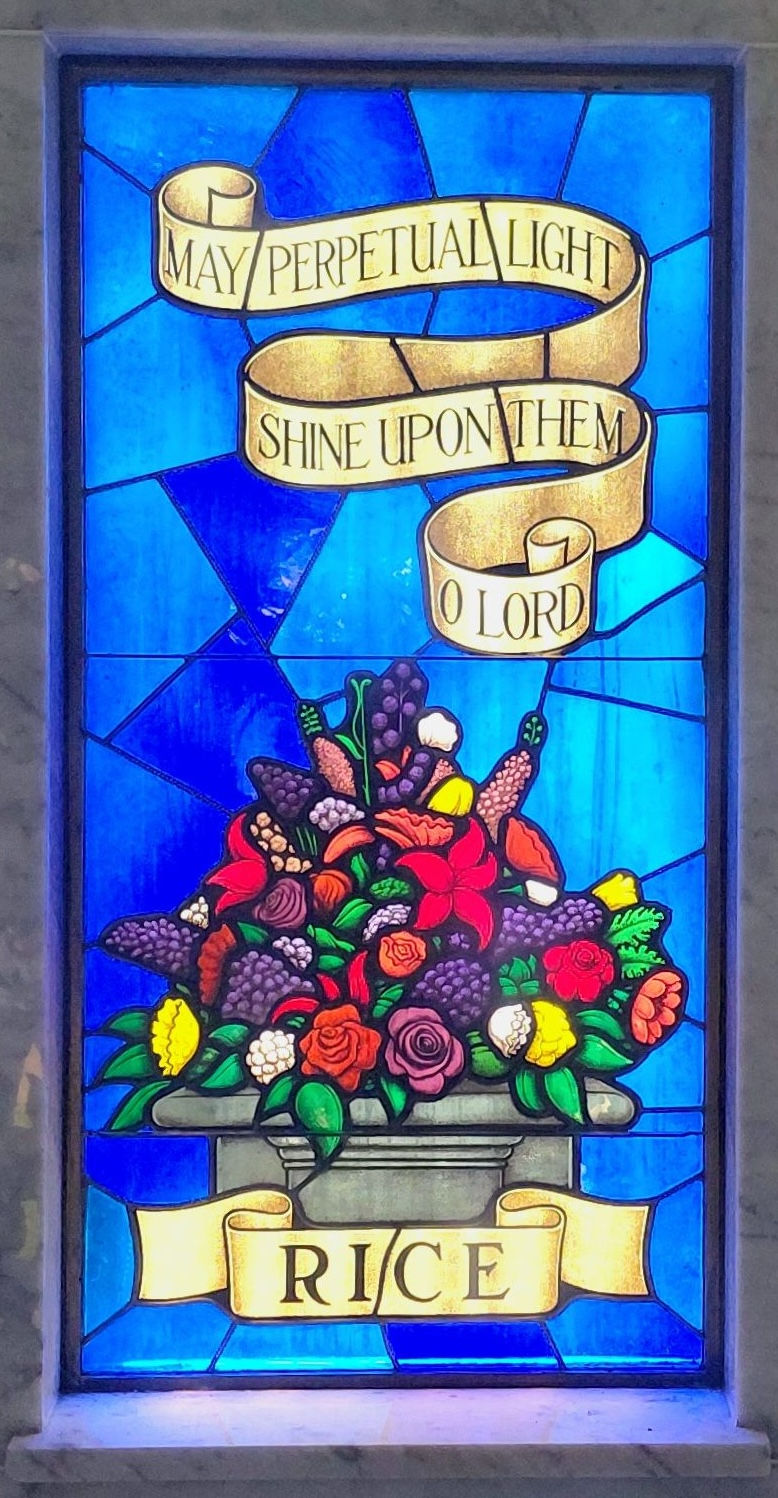
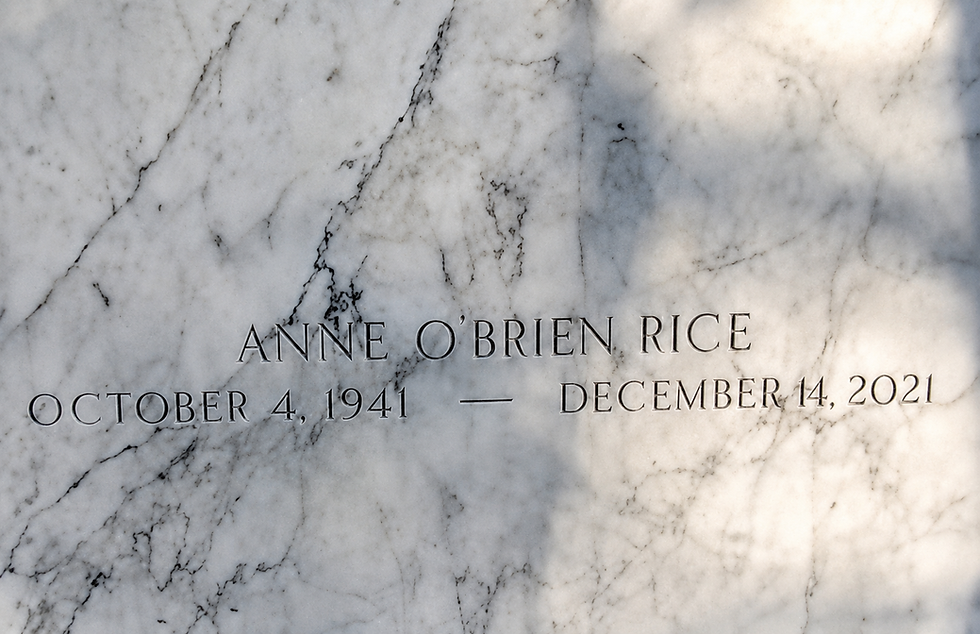
Today she rests in the Rice Family Mausoleum at Metairie Cemetery in New Orleans beside Stan Rice and their daughter Michele.



I’m so glad you wrote such a well researched article about Anne Rice. I’ve only read her Wikipedia bio, but I always wanted to know more about the chronology of her life.